
Modern networks have a habit of looking simple from the outside and getting very complicated the moment capacity, distance, or latency starts to matter. That is usually where optical transport systems enter the picture. They are not always the most visible part of a network, but they often carry the biggest load in the background: large data volumes, long-haul connections, and the kind of traffic that cannot really tolerate delay, instability, or frequent redesigns.
At a basic level, an optical transport system takes digital information, converts it into light signals, and sends those signals across fiber-optic infrastructure. That sounds straightforward enough, but the real value comes from how the system manages speed, reach, routing, and resilience all at once. For anyone comparing backbone options, metro connections, or data center links, this is where the topic starts to feel less theoretical and more practical.

What Is an Optical Transport System?
An optical transport system is a network layer designed to carry large amounts of traffic over fiber using light rather than electrical signaling. In many cases, it sits underneath IP and Ethernet services, acting as the physical and optical foundation that keeps everything moving.
This is one reason the category often gets grouped under broader infrastructure planning. It is not just about “moving bits”; it is about moving them efficiently, over distance, and with enough flexibility that the network can grow without being rebuilt every time demand increases. More details on the product category can be found in optical transport systems.
Unlike ordinary packet networks, optical transport is optimized for capacity and path quality across fiber. Packet systems are very good at handling routing logic and service segmentation, while optical layers are better at pushing huge data loads across the physical medium. The two are not really competitors in mature architectures; they tend to work together.
Typical use cases include:
- telecom backbone networks
- metro aggregation
- data center interconnects
- enterprise WAN backbones
- disaster recovery links
The Core Idea Behind Optical Transport
The fundamental logic is simple, even if the engineering around it is not.
Turning electrical signals into light
Data usually begins as an electrical signal in a switch, router, server, or other networking device. An optical transport platform converts that signal into light, typically using lasers and optical modulation. Once the data is encoded into an optical waveform, it can travel through fiber with very low loss over long distances.
This is where wavelength planning becomes important. Multiple channels can be carried on different wavelengths over the same fiber pair, which is one of the main reasons optical networks scale so well. Instead of adding more physical cables every time demand rises, operators can often add more optical channels or more advanced modulation formats.
A useful reference for the underlying fiber medium itself is the fiber-optic communication overview from Britannica, which explains why light-based transmission became the default for high-capacity long-distance networks.
Moving data through fiber
Fiber-optic cable acts as the transport medium. It is lighter, less noisy, and much better suited to long-distance transmission than copper in modern high-bandwidth systems. Still, fiber is not magical. Signals weaken over distance, and dispersion can cause them to spread out or distort.
That is why optical transport systems include components that compensate for signal loss, maintain usable quality, and keep the transmission stable. In practice, the network designer is balancing:
- transmission distance
- bandwidth per wavelength
- signal integrity
- cost per bit transported
- operational simplicity
The interesting part is that these balances shift depending on whether the network is designed for metro reach, regional connectivity, or long-haul transport.
Main Building Blocks of the System
Most optical transport networks are built from a small set of specialized components. The names can sound a little dense at first, but the roles are fairly intuitive once the signal path is broken down.
Transponders and muxponders
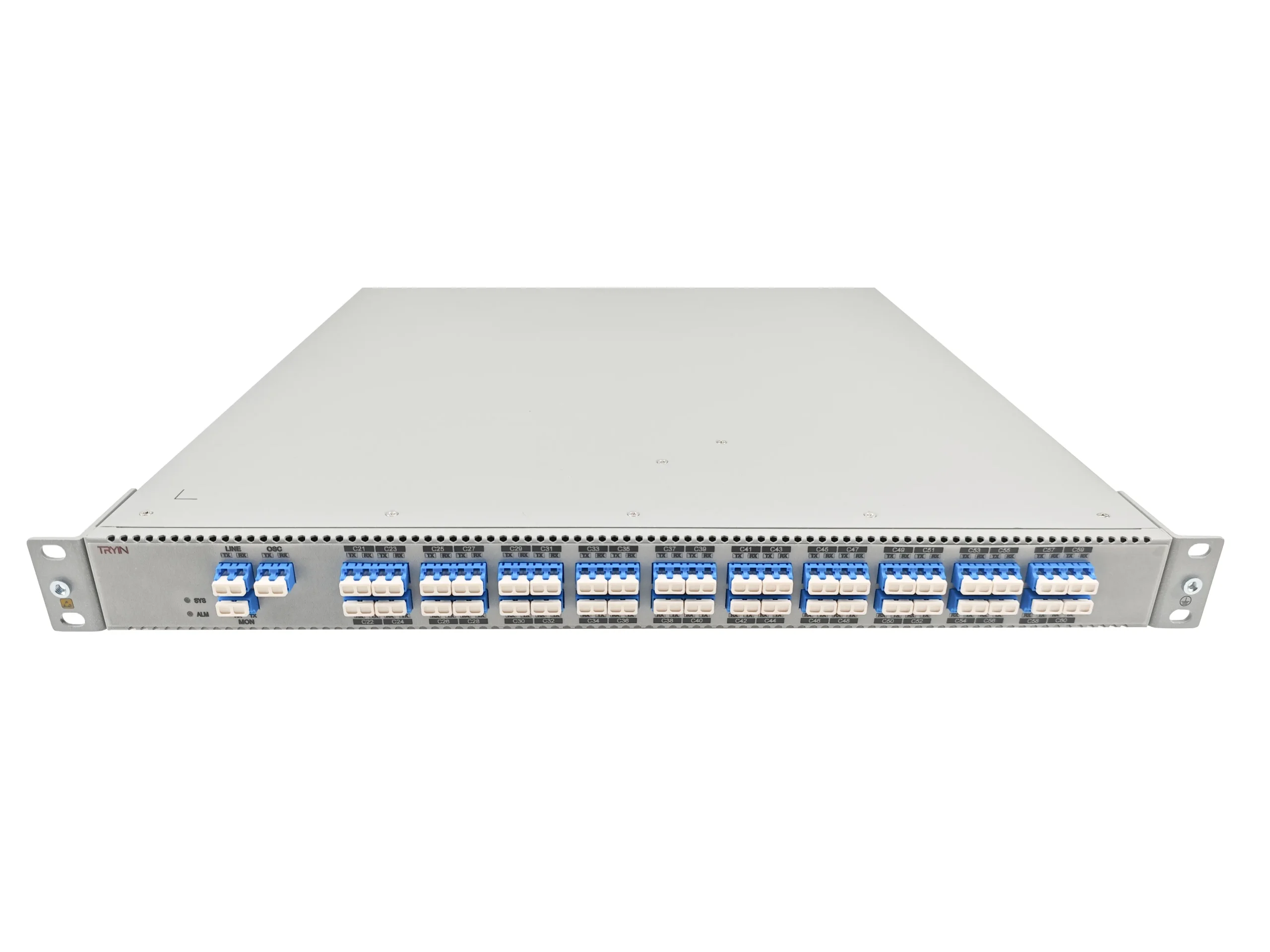
Transponders convert client-side signals into optical wavelengths that can travel across the transport network. They are often used when the incoming traffic format differs from the transport layer format.
Muxponders go one step further and combine multiple lower-rate signals onto a higher-capacity wavelength. That can improve efficiency, especially when traffic comes from different services or interfaces.
In simple terms:
- transponders adapt the signal
- muxponders adapt and aggregate the signal
This is often where network engineers gain the first real flexibility in transport design. Instead of allocating separate physical paths for every service, the system can concentrate several streams into fewer optical channels.
Optical amplifiers
At some point, light weakens. That is just physics. Optical amplifiers help extend reach by boosting the signal without converting it back to electrical form. That matters because every time a signal goes through an optical-electrical-optical process, it adds delay and complexity.
Common amplifier functions include:
- compensating for fiber loss
- extending the span between nodes
- reducing the need for repeated regeneration
They are not used everywhere, but they are often essential in long-reach or high-capacity deployments.
ROADMs and switching elements
A ROADM, or reconfigurable optical add-drop multiplexer, is one of the more useful inventions in modern transport networks. It allows selected wavelengths to be added, removed, or passed through dynamically. That means the network can reroute traffic at the optical layer without manually rewiring the system every time demand changes.
This flexibility is a major reason modern optical transport feels much more adaptable than older fixed-path designs. It also helps operators respond to faults, traffic shifts, and expansion needs with much less disruption.
Management and orchestration layer
The hardware matters, but the control layer matters just as much. Today, transport networks are increasingly managed through centralized software that monitors performance, automates configuration, and reduces manual intervention.
In some newer deployments, the emphasis is on simplifying operations almost to the point where remote provisioning becomes routine. Solutions in zero touch DCI reflect that trend, where deployment and service setup can be streamlined through automation rather than repeated hands-on configuration.
That operational shift is easy to underestimate. In the field, the difference between a network that can self-adapt and one that requires constant manual tuning often shows up in uptime, speed of rollout, and support workload.
The Data Path: End-to-End Signal Flow
To understand how optical transport systems work in practice, follow a single traffic flow from source to destination.
1. Traffic Ingestion and Electrical-to-Optical Conversion
A router, switch, or server injects electrical client traffic—whether Ethernet frames, storage protocols, or application data—into the transport equipment. The system maps this traffic to a specific optical wavelength, aligning the service type, bit rate, and line coding with the optical layer. If multiple client streams share the same fiber, the equipment multiplexes them using DWDM (Dense Wavelength Division Multiplexing) or OTN (Optical Transport Network) encapsulation to maximize fiber capacity.
2. Fiber Transmission and Signal Conditioning
Once launched into the fiber, the light signal propagates through the intended route. Over long spans, the signal encounters attenuation; the system deploys EDFA (Erbium-Doped Fiber Amplifier) or Raman amplifiers at strategic points to boost optical power and preserve signal quality without costly OEO (optical-to-electrical-to-optical) conversion.
3. Dynamic Path Selection (Optional Enhancement)
Where ROADM (Reconfigurable Optical Add-Drop Multiplexer) nodes exist, the network can dynamically reroute wavelengths in response to fiber cuts, maintenance windows, or traffic engineering demands. This optical-layer switching eliminates the need for physical cable reconfiguration and reacts to topology changes far faster than legacy fixed transport designs.
4. Optical-to-Electrical Recovery and Handoff
At the destination, the optical signal undergoes photodetection and is converted back to electrical format. The receiving transport equipment demultiplexes any aggregated streams, restores the original client signal, and hands it off to the target router, switch, or server. The result is transparent delivery of the original traffic, with the optical transport layer remaining invisible to the end devices.

Optical Transport in Real-World Networks
The strongest use cases for optical transport systems tend to show up where bandwidth pressure is high and downtime is expensive.
Data center interconnects
Data center traffic has a relentless appetite for capacity. Workloads replicate, backup jobs move huge datasets, and distributed applications often expect near-real-time synchronization. In that environment, Optical DCI is especially valuable because it offers high throughput and very low latency between facilities.
This is also where optical transport starts to feel less like infrastructure and more like a timing mechanism for the entire business. If the interconnect lags, so does everything else built on top of it.
Telecom and service provider backbones
Service providers rely on optical transport for metro and long-haul backbone links. These networks need to scale over time, support many services, and remain stable under heavy load. The optical layer is attractive because it can carry vast traffic volumes with relatively efficient use of fiber assets.
It also supports service evolution. As packet traffic grows, the transport layer can often be upgraded without rethinking the whole backbone design.
Enterprise and campus networks
Large enterprises use optical transport for private WAN links, disaster recovery, and critical inter-site communication. Even when packet switching handles the day-to-day traffic logic, the optical layer often provides the physical backbone that makes fast and reliable connectivity possible between sites.
In this context, the value is not just speed. It is predictability. Networks that carry financial, industrial, healthcare, or cloud-connected workloads often need that extra level of consistency.
Optical Transport vs Traditional Packet Transport
| Feature | Optical Transport Systems | Traditional Packet Transport | Why It Matters |
|---|---|---|---|
| Primary medium | Light over fiber | Electrical packet forwarding over network devices | Each layer solves a different problem |
| Typical strength | High bandwidth and reach | Flexible routing and service control | Each layer solves a different problem |
| Latency | Very low | Low to moderate, depending on hops | Lower latency helps sensitive workloads |
| Scaling method | More wavelengths, better optics, denser fiber use | More ports, more routing capacity | Optical often scales more efficiently at the physical layer |
| Operational style | Optical path engineering | Packet-level traffic engineering | The design goals are not identical |
| Best fit | Backbone, DCI, long-haul transport | Service delivery, segmentation, routing | Many networks use both |
A table like this makes one thing obvious: the question is rarely “which one is better?” It is usually “which one belongs at which layer?”
Benefits and Trade-Offs
Optical transport systems are popular for good reasons, but they are not a free lunch.
Main advantages
- very high bandwidth
- strong long-distance performance
- low latency
- efficient use of fiber assets
- good fit for backbone-scale growth
- support for flexible wavelength routing
The system becomes especially attractive when traffic growth is uneven or unpredictable. A network might look overbuilt for a while, then suddenly become underpowered almost overnight. Optical transport helps absorb that volatility.
Trade-offs worth noting
- planning can be more complex than packet-only networks
- equipment and design costs can be significant
- fiber quality matters a great deal
- troubleshooting often requires specialized knowledge
- interoperability needs careful validation
That last point is often understated. Optical environments can be incredibly powerful, but they are also unforgiving when design assumptions are wrong. A small mismatch in power budget, dispersion tolerance, or optical compatibility can become a real operational headache.
For technical context on standards and transport-layer considerations, the ITU-T optical transport network recommendation is a useful reference point.
What To Consider Before Deploying
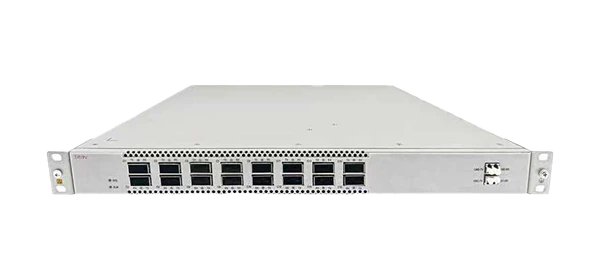
Before deploying or upgrading an optical transport platform, a few practical questions tend to matter more than the marketing claims.
- Is the fiber plant ready for the required reach and channel plan?
- How much growth is expected over the next few years?
- Will automation be needed for provisioning and failover?
- Does the solution integrate cleanly with existing network layers?
- Are monitoring tools available for optical performance and fault analysis?
The best deployments usually start with a realistic traffic forecast. Networks that underestimate growth tend to pay twice: once for the initial build, and again for the rushed expansion. It is also worth checking whether the operational model is centered on manual handling or more automated workflows, especially if frequent service turn-up is expected.
A network built around DCI platform requirements, for example, may need different latency and automation priorities than a traditional long-haul carrier backbone.
Conclusion
Optical transport systems work by converting traffic into light, sending it across fiber, and managing that transmission with optical components that preserve speed, reach, and flexibility. The concept is simple enough, but the real strength comes from how the pieces fit together: transponders, amplifiers, ROADMs, orchestration, and wavelength planning all contribute to a system that can move enormous amounts of data with surprising efficiency.
In day-to-day network planning, these systems tend to stay in the background until capacity pressure starts making itself known. Then they become hard to ignore. And once that happens, optical transport usually stops being an abstract infrastructure topic and starts looking like the thing holding the whole network together.
FAQ
How does wavelength division multiplexing increase capacity without adding more fiber?
Wavelength division multiplexing places multiple optical channels on different light wavelengths within the same fiber pair. That lets the network carry more traffic on existing infrastructure, which is often much easier than laying new cable.
What makes optical transport useful for latency-sensitive applications?
The signal path is highly direct, and the data does not need to be repeatedly processed by multiple packet hops. That helps reduce delay, especially in environments like inter-data-center links or real-time service backbones.
Can optical transport and packet networking share the same overall architecture?
Yes. In fact, they usually do. Optical transport provides the underlying high-capacity path, while packet layers handle routing, service logic, and application-specific traffic handling. The two are often complementary rather than separate choices.