What is SFP Optical Transceiver?
Modern networks are under relentless pressure to move more data. AI training clusters, cloud data centers, and 5G transport all push link speeds upward, and every upgrade path eventually runs
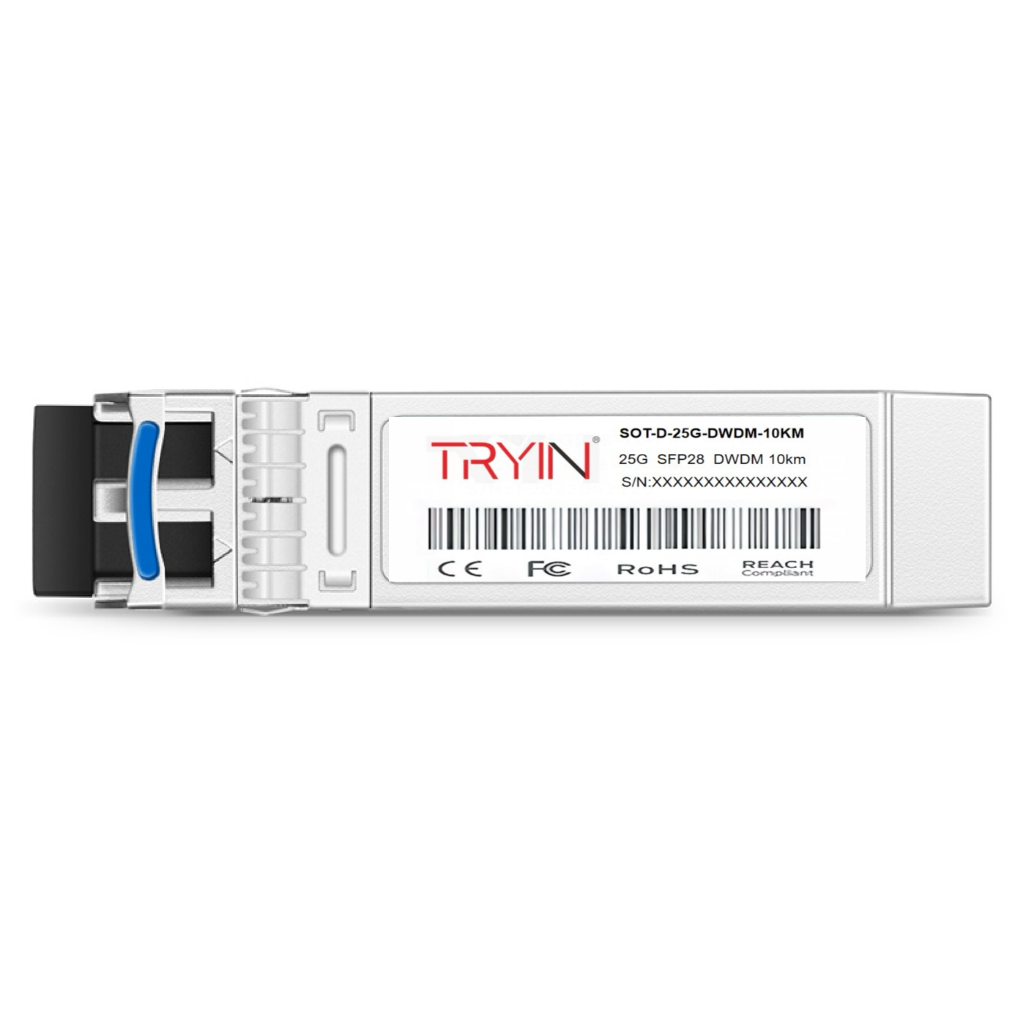
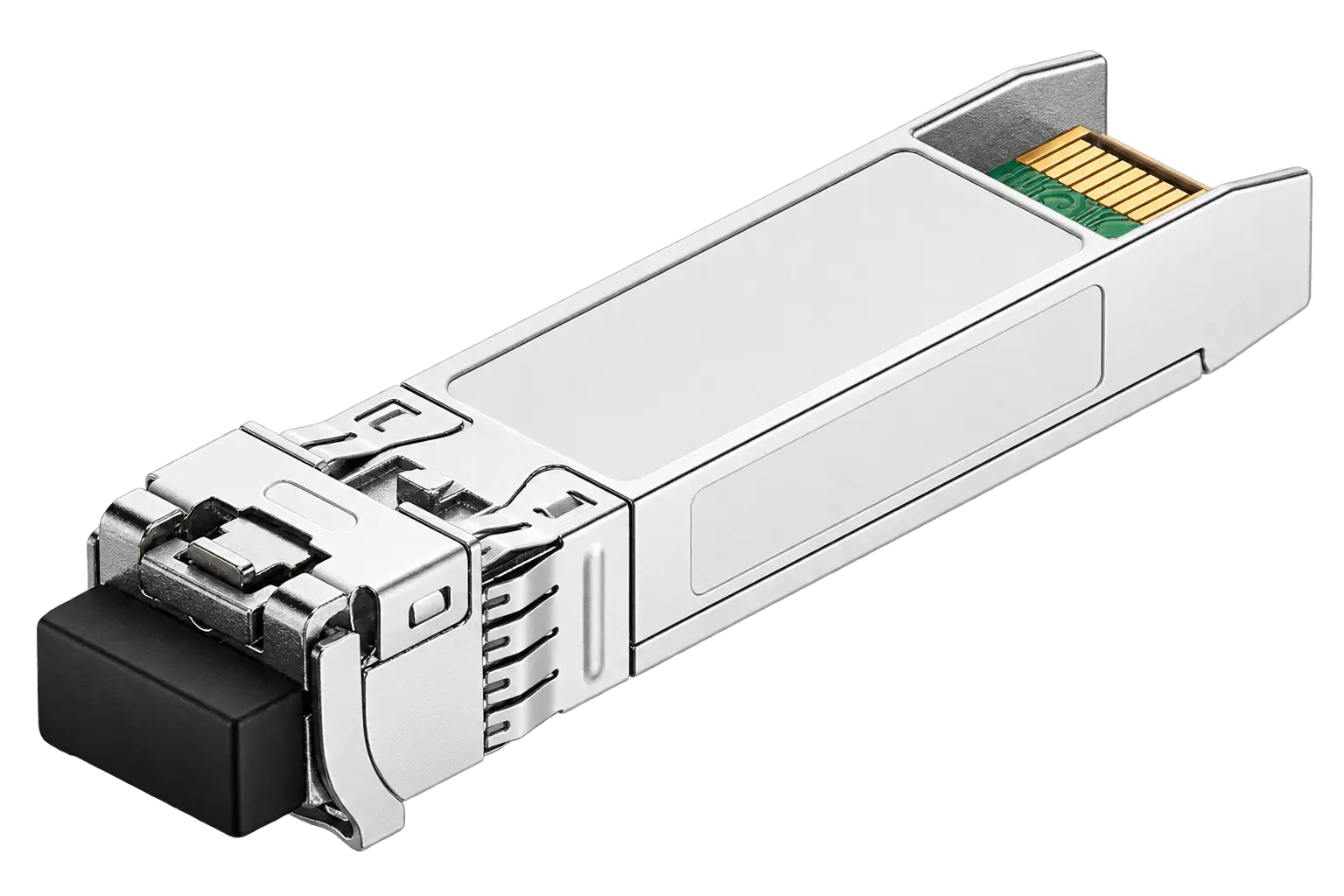
A 25G optical transceiver is a compact high-speed module that converts electrical signals into optical signals for transmission over fiber optic cables — and back again — at data rates of up to 25 gigabits per second.

25G optical transceivers provide compact, high-speed optical connectivity for data centers, enterprise networks, telecom systems, and high-performance computing environments, delivering more bandwidth than 10G while maintaining the familiar SFP form factor.
25G optical transceivers convert electrical signals generated by switches, servers, routers, and network interface cards into optical signals for transmission over fiber. At the receiving end, they convert the optical signal back into electrical data, enabling reliable communication between network devices.
They provide 25 Gigabit Ethernet connectivity for bandwidth-intensive applications such as server-to-switch links, high-performance computing, cloud infrastructure, and enterprise networks. Compared with 10G, 25G delivers 2.5 times the bandwidth while maintaining a similarly compact SFP-based footprint.
One of the most common functions of 25G transceivers is connecting high-performance servers and network interface cards to Top-of-Rack, Middle-of-Row, or End-of-Row switches. This allows data centers to increase server access bandwidth without significantly increasing port size or cabling complexity.
Different 25G optical modules support a wide range of transmission distances. SR modules are suitable for short-reach multimode fiber connections inside data centers, while LR and other single-mode solutions can support longer links between network rooms, campus buildings, or telecom equipment.
The compact SFP28 form factor allows switches and routers to accommodate a high number of 25G ports within limited rack space. This makes 25G a practical upgrade path from 10G and enables higher-capacity server access, enterprise aggregation, and service-provider connections while helping control equipment footprint and power consumption.
25G optical transceivers are widely used in data centers, cloud platforms, enterprise networks, and telecom infrastructure, providing a practical balance of bandwidth, port density, power efficiency, and deployment flexibility.
From pre-sales verification to long-term operation, our support team stays with you at every stage of your network deployment.
Provide demo environments and POC test support to verify product performance and compatibility.
7×24 hours remote technical support to quickly solve deployment, configuration, installation, and fault problems.
Standard 2-year warranty (flexible adjustment via contract negotiation), covering hardware faults and performance assurance.
World-class customer support team to ensure long-term stable network operation.
A 25G optical transceiver is a compact module that converts electrical data signals into optical signals and back again at speeds of up to 25 Gbps. Most 25G Ethernet modules use the SFP28 form factor and are commonly deployed in data centers, enterprise networks, telecom systems, and 5G transport networks.
The SFP28 form factor is physically similar to SFP+, but compatibility depends on the switch, NIC, and transceiver. Many SFP28 ports can operate with 10G SFP+ modules, but a standard 25G SFP28 transceiver cannot automatically operate at 10G unless it specifically supports multiple data rates. Always check the equipment compatibility matrix before deployment.
The main difference is data rate. SFP+ is primarily designed for 10 Gigabit Ethernet, while SFP28 supports 25 Gigabit Ethernet using a similar compact form factor. This allows network operators to achieve approximately 2.5 times the bandwidth per port without significantly increasing switch port size.
Transmission distance depends on the module type and fiber infrastructure. 25G SR modules are designed for short-reach multimode fiber links, while LR, ER, CWDM, and DWDM modules can support longer single-mode fiber connections. The exact reach should always be checked against the specifications of the selected transceiver.
Yes, some 100G QSFP28 ports support breakout configurations that divide one 100G interface into four independent 25G links. This typically requires a compatible 100G breakout transceiver or cable and switch support for 4×25G breakout mode. The resulting connections operate as four separate 25G channels rather than one single 100G link.

Modern networks are under relentless pressure to move more data. AI training clusters, cloud data centers, and 5G transport all push link speeds upward, and every upgrade path eventually runs

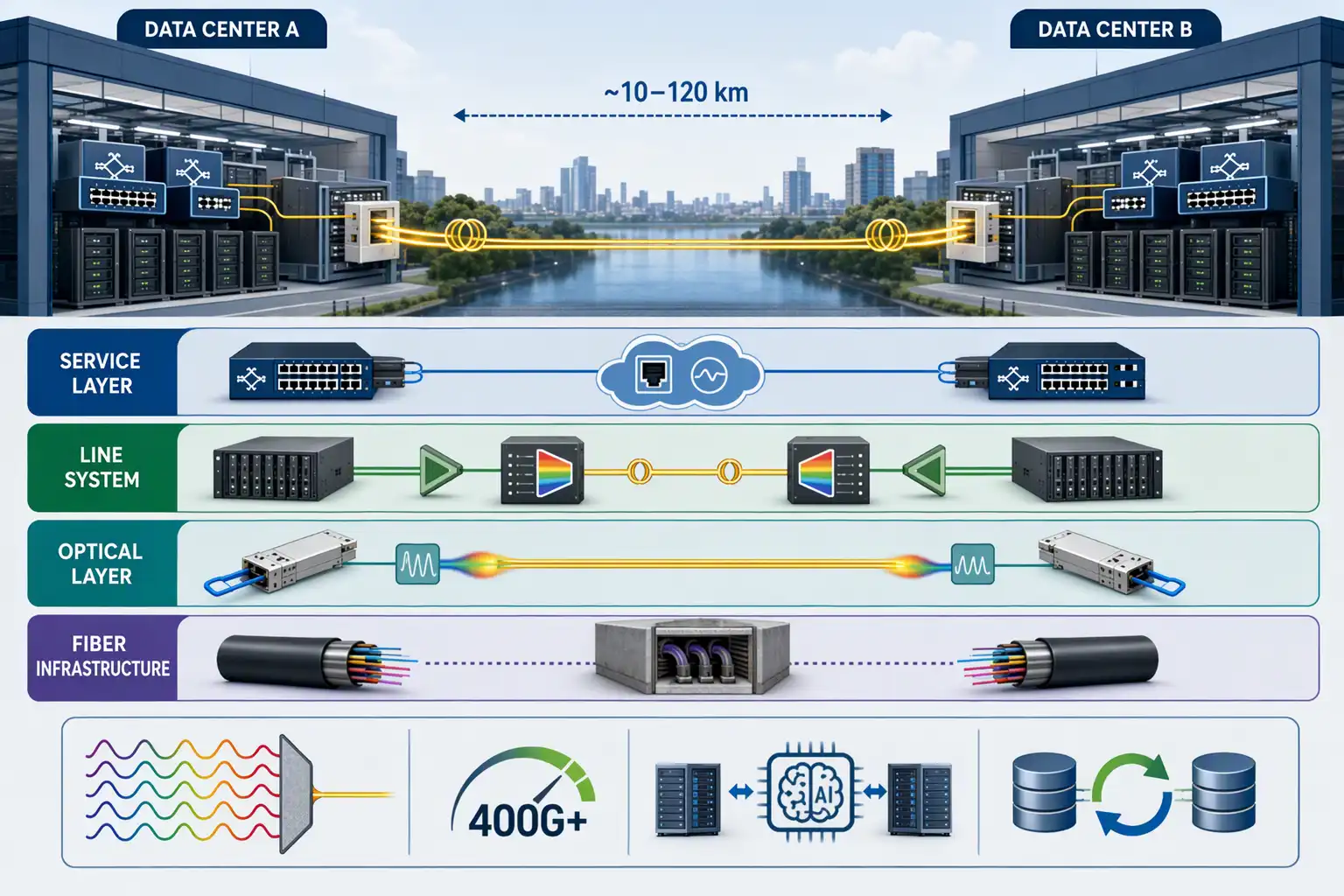
Data center traffic is growing faster than the fiber infrastructure that carries it. AI training clusters, cloud replication, and content delivery are pushing inter-data-center bandwidth into the terabit range, while

As video, cloud, and AI-driven traffic pushes fiber networks toward their capacity limits, operators need ways to multiply throughput without laying new cable. Dense Wavelength Division Multiplexing (DWDM) transmits dozens
+8618934815799
Building 13, Unit 1, Creative Industry Park, No. 70 Qilidian Road, Qixing District, Guilin City