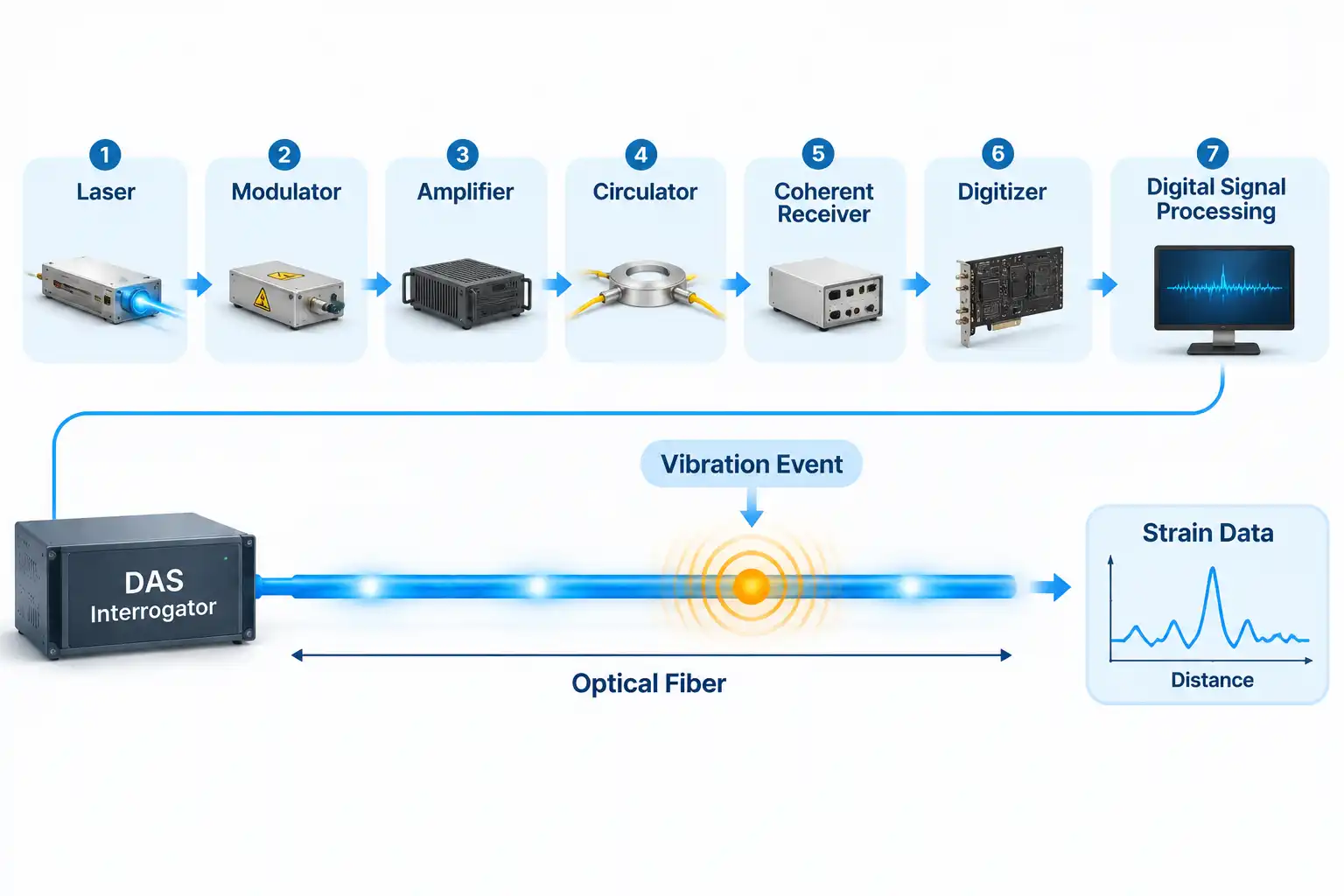
What Is Distributed Acoustic Sensing (DAS)? A Complete Guide
A pipeline right of way, a rail corridor, a perimeter fence and a power cable route share one property: the asset is measured in tens of kilometers, and the events

Optical DCI Networks Solution Series
A DCI platform is a WDM transmission system built specifically for data center interconnection (DCI) — the high-capacity optical links that carry traffic between data centers. Unlike a general-purpose transport shelf, it is designed around what a data center computer room actually constrains: rack space, airflow, and adding capacity without interrupting live traffic.
One chassis carries both layers. Coherent service cards map client-side 10GE/25GE/100GE/400GE signals onto 100G, 200G or 400G line-side wavelengths; amplifiers, multiplexers, WSS and optical protection cards combine them onto a DWDM line.
That integration is what separates a modular optical transport platform from a fixed transport box. Built from hot-swappable service cards, fan and power modules, a modular DWDM chassis starts at the capacity a site needs today and grows toward 48 or 96 channels, with further chassis cascaded as traffic climbs. The same DCI platform serves a short point-to-point link between two nearby data centers and the long-distance backbone between distant ones.
The electrical layer accepts 10G Ethernet services including LAN and WAN, 100GE, and OTN services such as STM64, OTU2 and OTU4, so mixed client traffic is groomed onto the same transport line.
The modular DWDM chassis reaches 6.4 Tbps in a 2U footprint, upgrades smoothly from 48 to 96 channels, and supports multi-chassis cascade expansion as a site outgrows one shelf.
FEC coding runs on both the client side and the line side, and line-side transmission uses QPSK and 16QAM modulation, carrying wavelengths over short data center links and long backbone routes alike.
Optical channel 1+1 protection and optical line 1+1 protection are supported, together with 1+1 redundancy for the control card, power supply and fans, plus front-to-rear airflow.
A B/S architecture delivers unified management of equipment networking and configuration, with SNMP/Netconf, CLI and web access, dual control cards and OSC out-of-band supervision.
A DCI platform is deployed wherever data center sites have to exchange traffic at wavelength capacity, from a single point-to-point span to a metro or backbone WDM ring, and the same modular DWDM chassis serves each of the cases below.
From pre-sales verification to long-term operation, our support team stays with you at every stage of your network deployment.
Provide demo environments and POC test support to verify product performance and compatibility.
7×24 hours remote technical support to quickly solve deployment, configuration, installation, and fault problems.
Standard 2-year warranty (flexible adjustment via contract negotiation), covering hardware faults and performance assurance.
World-class customer support team to ensure long-term stable network operation.
Tryin R&D Center integrates innovation with validation to develop high-performance, standardized optical equipment aligned with evolving market demands. Leveraging customer insights and expert collaboration, we conduct rigorous real-world testing to ensure superior quality and reliability. Through precision engineering and strict laboratory processes, we achieve efficient development and stable production.


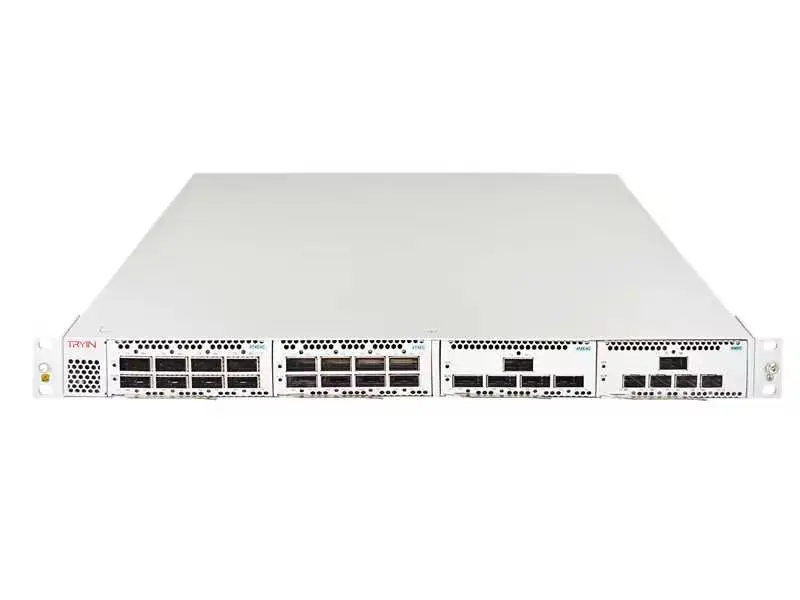
The family is offered in 1U and 2U chassis, so a site can be matched to its port count and its rack budget. A 2U standalone chassis supports up to 6.4 Tbps and takes up to eight quarter-width or four half-width service cards; the 1U chassis in the same family reaches 1.6 Tbps with up to sixteen 100G QSFP28 client ports. The choice comes down to capacity per rack unit.
The electrical layer takes coherent service cards: 2×200G muxponder, 400G muxponder, 400G muxponder in QDD form, 400G OEO, 2×400G transponder, and the T10 and T20 muxponder cards. The optical layer takes gain-tunable OA and line-site OLA amplifiers, BA, PA, BPA and DLA amplifiers, VBA, VPA and VLA variable-input cards, a Raman RFA card, OMU48/ODU48 multiplexers, VMUX48, 1×9 WSS, TFF, OCM and the OP protection card. The mix is decided by what the site has to carry.
It is built for that. The chassis uses standard CRPS server power supplies, moves air from front to rear the way a server row does, and is rated for -10 to 45 °C working temperature with 10 to 90 percent relative humidity and no condensation. At 2U high and 446 mm wide it mounts in a standard 19-inch rack, so a DCI platform can sit in the same row as compute and storage.
Yes. Control card and service card programs can be upgraded online through the web interface, and single cards are hot-swappable, so a swap does not disturb running traffic. With two control cards fitted, remote monitoring and management continue unaffected after one of them fails.
Two layers of protection sit in the same shelf. On the optical layer, an OP card runs 1+1 double transmission with select-at-receive, switches in milliseconds, and supports manual, automatic and delayed switch-back for cable route or service channel protection. On the equipment layer, control cards, power supplies and fans run 1+1 or N:1 redundancy, and every card is hot-swappable, so a single failure does not interrupt service.
A pipeline right of way, a rail corridor, a perimeter fence and a power cable route share one property: the asset is measured in tens of kilometers, and the events
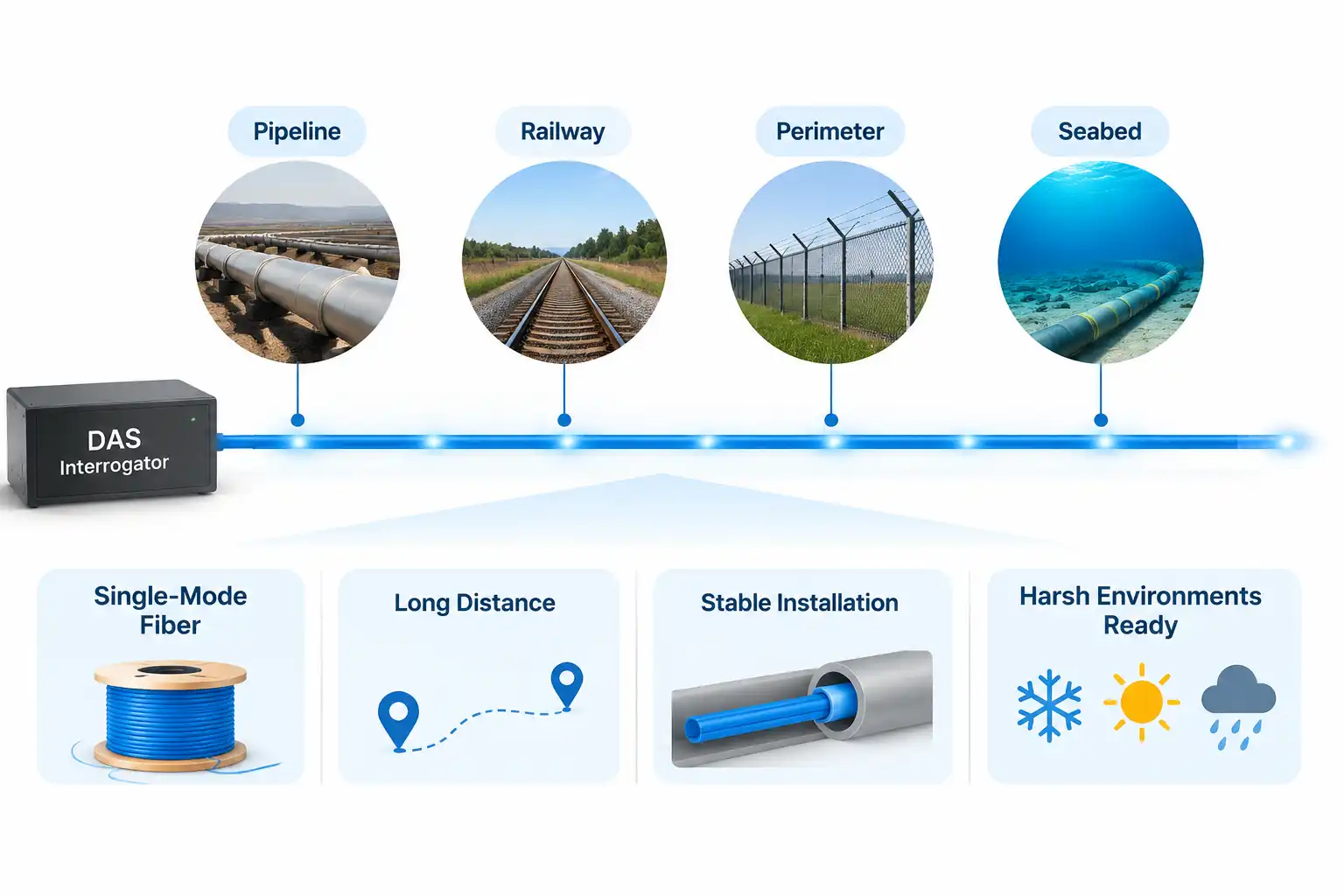
Pipelines, rail corridors, border fences, wellbores and seabed cables share one property: they are long, and faults anywhere along them matter. Point sensors have never solved that geometry well, because
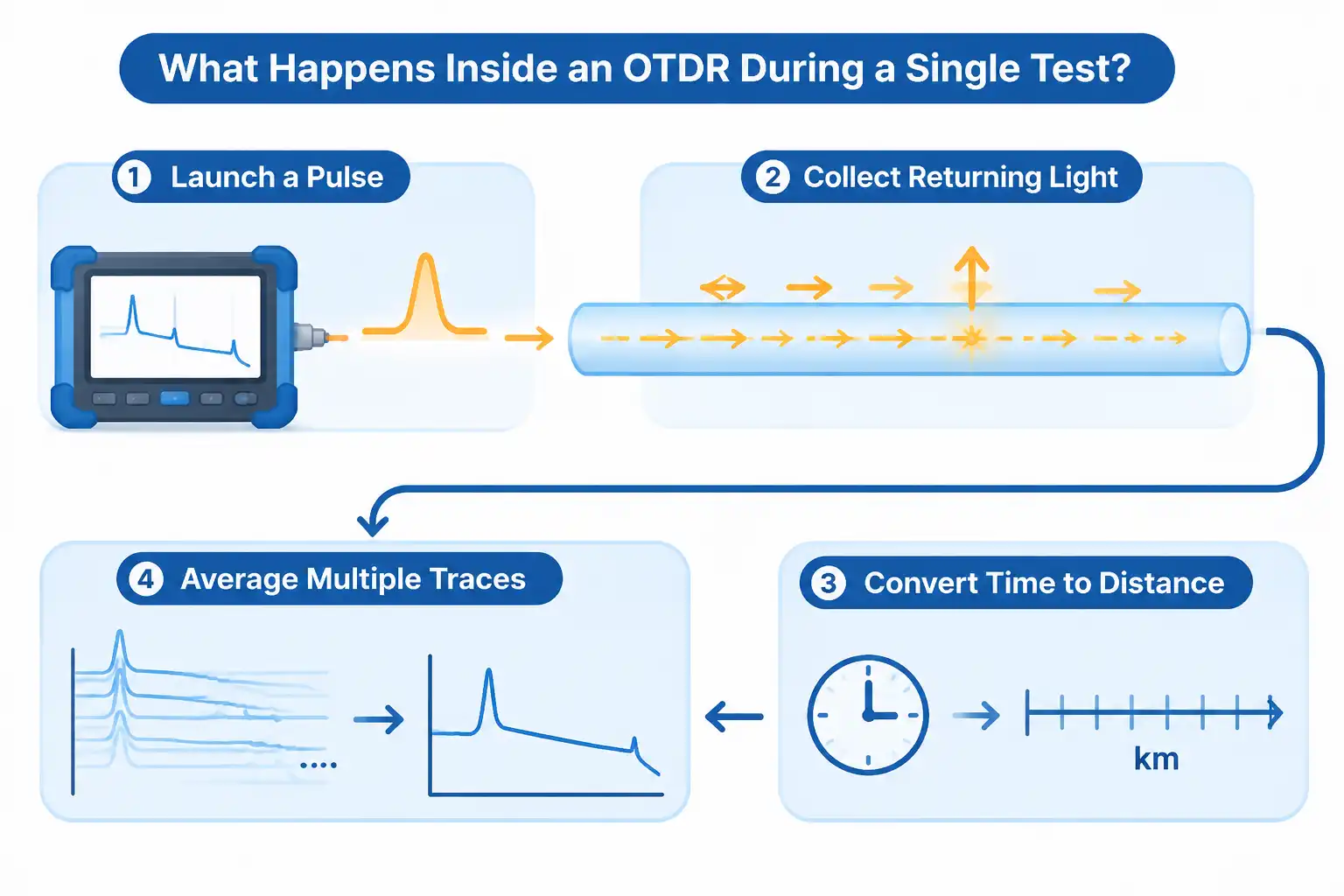
Fiber links rarely fail loudly. A span that passed acceptance two years ago starts throwing intermittent errors, and the loss budget that looked comfortable on paper no longer closes. Finding
+8618934815799
Building 13, Unit 1, Creative Industry Park, No. 70 Qilidian Road, Qixing District, Guilin City