
Optical transport often sounds like a clean, almost invisible part of the network stack, but it does a lot of heavy lifting behind the scenes. In practice, Optical Transport Systems are what allow huge amounts of data to move quickly, reliably, and over distances that would be impractical for simpler transmission methods. That matters whether the traffic is flowing through a metro network, between data centers, or across a long-haul backbone where a brief interruption can turn into a bigger operational headache than expected.
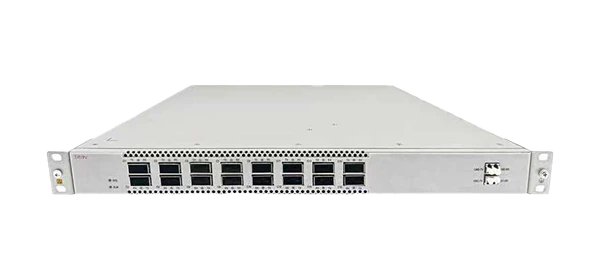
What an Optical Transport System Is Designed to Do
At a basic level, an optical transport system moves data over fiber using light. But that simple description hides a lot of engineering decisions. The system has to carry different traffic types, maintain signal integrity, and support growth without forcing a complete redesign every time bandwidth demand rises.
For readers exploring the broader product landscape, it helps to look at optical transport systems as the backbone layer that connects sites, aggregates services, and keeps critical links running with minimal fuss. That includes high-capacity routing between cities, dense enterprise environments, and data infrastructure that needs both performance and resilience..
Main Components of an Optical Transport System
The exact architecture can vary, but most optical transport deployments share a few core elements. Each one plays a slightly different role, and in real networks, the value comes from how these pieces work together rather than from any single component alone.
Optical Transceivers
Optical transceivers are the interface between electrical and optical domains. They convert electrical signals into light for transmission and then convert incoming light back into electrical signals at the receiving end.
These modules may not seem dramatic, but they are essential. Compatibility, wavelength support, reach, and form factor all affect how smoothly the system operates. A network might look fine on paper, yet still run into problems if the transceiver mix is mismatched or too limited for future upgrades.
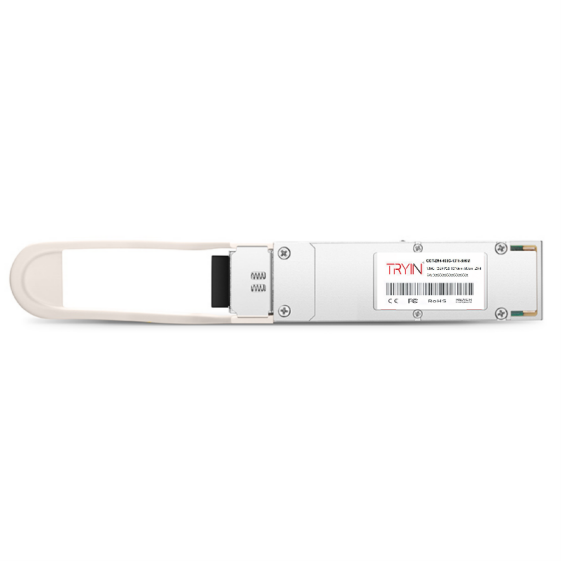
Multiplexers and Demultiplexers
One of the biggest advantages of optical transport is the ability to send multiple signals over a single fiber. That is where multiplexing comes in.
A multiplexer combines several wavelengths onto one fiber, while a demultiplexer separates them again at the far end. This is the logic behind DWDM and CWDM-style deployments, where capacity increases without the need to lay down new fiber every time traffic grows. It is a clever approach, really, and one that often gives networks far more breathing room than they initially expect.
Optical Amplifiers
As light travels through fiber, it weakens. Optical amplifiers extend transmission distance by boosting the signal without converting it back into the electrical domain first.
The most familiar types include EDFAs and Raman amplifiers. They are not a cure-all, though. Amplification helps preserve reach, but it still depends on good system design, clean channel planning, and disciplined power management. Otherwise, an amplified signal can just become a louder version of a poor one.
Optical Transport Platforms and Chassis
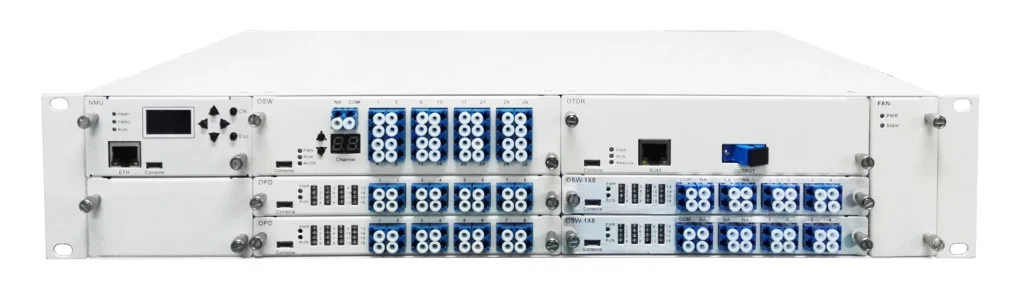
The transport platform is where many of the moving parts are organized. In modular systems, this usually means a chassis that holds line cards, service cards, and other functions needed to configure the network for specific applications.
This is where flexibility starts to matter. Some deployments need a compact setup; others need room to grow into new services later. A modular approach is often preferred because it supports expansion without forcing a full replacement. For example, multi service transport platform solutions are typically built around this kind of adaptability, which makes them attractive when one network has to handle several traffic types at once.
Optical Switching and Protection Mechanisms
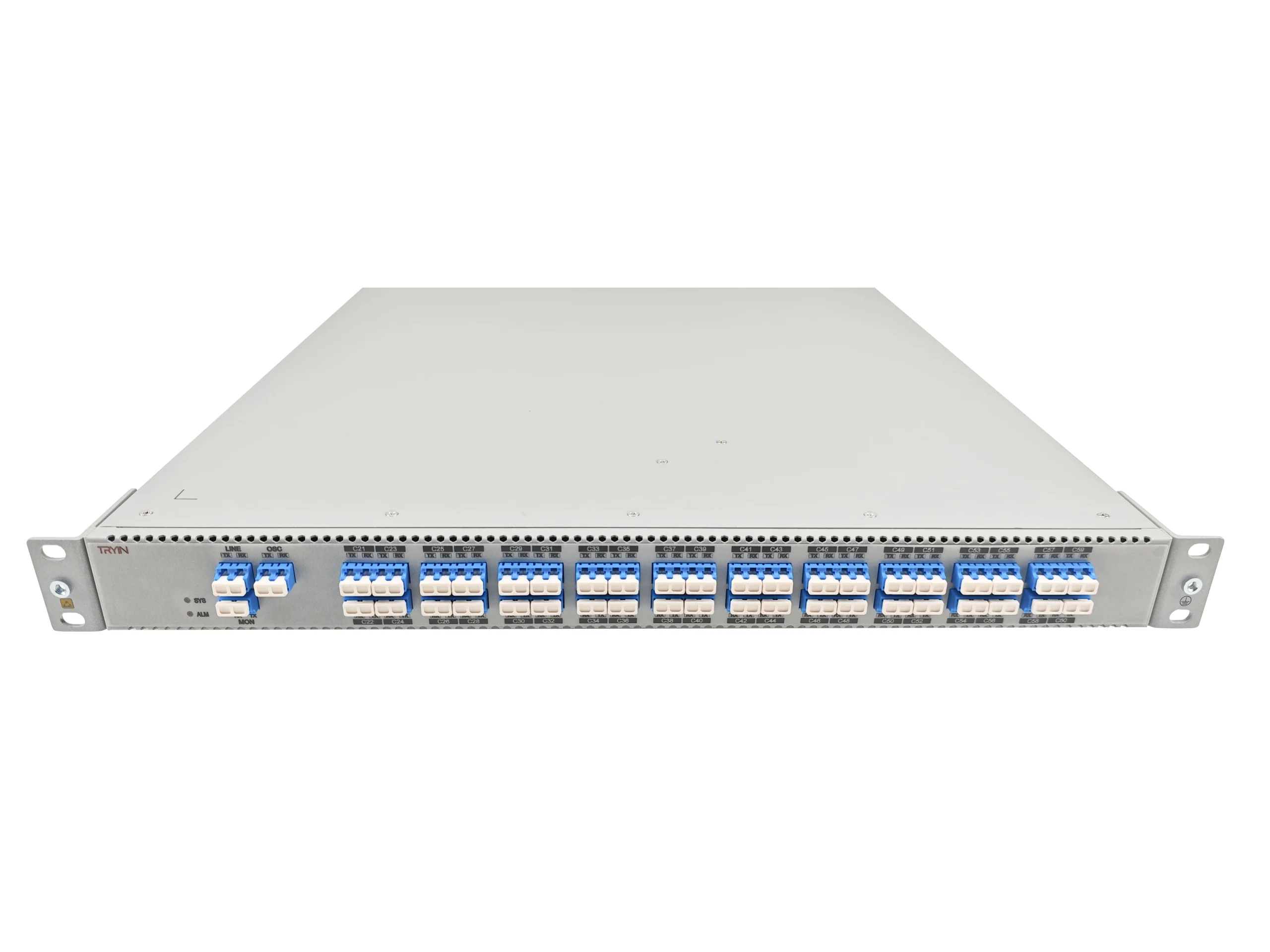
Reliability is one of those features that seems invisible until the moment it is missing. Optical switching and protection mechanisms help keep traffic moving if a fiber cut, equipment failure, or other fault interrupts the primary path.
In many networks, automatic protection switching is what prevents a small issue from becoming a prolonged outage. That kind of rapid rerouting matters more than most people realize, especially where service-level expectations are tight. Operators tend to care less about the elegance of the feature and more about whether the traffic stays up when something fails.
Monitoring and Management Systems
Even a strong optical transport layer needs visibility. Monitoring and management tools provide real-time status, alarms, performance metrics, and configuration control.
Without that layer, troubleshooting becomes guesswork. With it, teams can spot degradation before it becomes a full failure, track signal quality, and make smarter capacity decisions. In many cases, remote visibility has become just as important as raw throughput, because the network that can be observed is usually the network that can be maintained.
How the Components Work Together
The individual components matter, but the real value appears when they function as a system. A simplified signal path usually looks something like this:
- Data enters through the transceiver
- Wavelengths are combined through multiplexing
- The signal is extended by amplification when needed
- The transport platform organizes and delivers services
- Protection and monitoring tools keep everything stable
That sequence may sound straightforward, but in practice each stage has trade-offs. The challenge is not just moving data; it is moving it efficiently, consistently, and in a way that still leaves room for growth.
Common Use Cases for Optical Transport Systems
Optical transport is used in several high-demand environments, and the requirements are not always the same. Some networks care most about distance. Others care about latency, service variety, or resilience.
Common use cases include:
- Core and backbone network transport
- Metro aggregation
- Data center interconnect
- Enterprise campus connectivity
- High-capacity regional links
For modern cloud and carrier environments, DCI platform has become especially relevant. Data center interconnect traffic tends to be heavy, time-sensitive, and increasingly constant, so the optical layer has to deliver both speed and predictable behavior.
Key Factors to Consider When Choosing a System
Choosing the right optical transport architecture is rarely about one feature alone. It usually comes down to a mix of capacity, service mix, manageability, and how much future growth the network is expected to absorb.
| Factor | Why It Matters | Practical Impact |
|---|---|---|
| Capacity | Determines how much traffic the system can carry | Avoids early congestion and expensive upgrades |
| Distance | Affects whether amplification or regeneration is needed | Impacts design cost and equipment selection |
| Service mix | Some networks carry Ethernet, storage, or legacy protocols | nfluences platform flexibility |
| Latency sensitivity | Critical for trading, cloud, and real-time services | Can shape path design and protection strategy |
| Scalability | Helps the system grow with demand | Reduces the need for major redesigns |
| Operations simplicity | Easier systems are usually easier to maintain | Lowers troubleshooting time and overhead |
A network often looks efficient during initial deployment, but the real test comes later, when traffic patterns change and new services appear. That is where a sensible design pays off.
Conclusion
A modern optical transport layer is more than fiber and light. It is a coordinated set of components—transceivers, multiplexers, amplifiers, transport chassis, protection tools, and management systems—that together keep data moving reliably at scale. When these pieces are chosen well and integrated thoughtfully, the network usually feels more stable, more flexible, and much easier to grow.
For organizations planning long-term infrastructure, Optical Transport Systems are not just a transmission choice. They are a foundation for performance, resilience, and future expansion.
FAQ
What is the difference between optical transport and optical switching?
Optical transport is mainly about carrying data efficiently over fiber, while optical switching focuses on directing traffic between paths or services. In many networks, both functions work together, but their priorities are not identical.
Can optical transport systems support both legacy and modern services?
Yes. Many platforms are built to handle mixed environments, which is useful when older protocols still exist alongside Ethernet-heavy traffic or cloud-oriented workloads.
Why do some networks prefer modular optical platforms over fixed ones?
Modular systems are easier to expand, reconfigure, and maintain. That makes them appealing for organizations that expect traffic growth or changing service requirements over time.