
It is hard to miss what’s happening inside hyperscale and AI cluster networks this year. Where 400G links were once the obvious upgrade path, 800G transceivers have suddenly become the default assumption for any new build that expects to handle serious machine learning traffic. Not because the industry simply wanted a bigger number, but because a set of advances—massive GPU clusters, 51.2 Tbps switch chips, and maturing pluggable coherent optics—finally made moving to 800 gigabit a practical, almost urgent step.
The Unrelenting Thirst for Bandwidth in the AI Era
When a single large language model spreads across tens of thousands of GPUs, the back‑end network is no longer a supporting actor. It becomes the fabric that decides whether those expensive accelerators run at full utilization or sit idle waiting for gradients. A cluster with 32,000 GPUs, each needing at least 400 GB/s of bandwidth to its neighbors, quickly pushes aggregate fabric capacity into the petabit range. At that scale, even slight oversubscription becomes a performance killer. It is no surprise, then, that the back‑end rails linking GPU pods are being architected around 800‑gigabit ports, often using breakout cables to keep port counts manageable. From the data center floor, it seems like 400G ports started to feel like a bottleneck almost overnight—one that an 800G step function handily resolves.
Where 800G Wins: A Quick Look at Real‑World Use Cases
Hyperscale Data Center Fabrics
Large cloud providers are refreshing spine‑leaf architectures with 800G ports that consolidate what used to be multiple 400G connections. The benefit goes beyond raw speed; fewer physical links mean simpler cabling and lower per‑bit power, which matters enormously when power budgets are already stretched thin.
AI/ML Training Back‑End Networks
In AI back‑end networks, the shift is even starker. Dedicated rail networks built for all‑reduce operations are adopting 800G transceivers to match the bandwidth of GPUs like NVIDIA’s H200 and B200 series, which pump out 400‑800 GB/s of east‑west traffic. A single 800G interface can fan out to multiple 100G or 400G links, giving architects the flexibility to tune topology without sacrificing throughput.
A handful of drivers keeps pushing this trend forward:
– Unprecedented east‑west bandwidth in distributed training jobs
– Mature 112 Gbps PAM4 lanes, enabling 8×100G optical designs
– 51.2T switch ASICs with native 800G ports eliminating gearbox chips
– Clear energy‑per‑bit advantages compared to stacking multiple 400G links
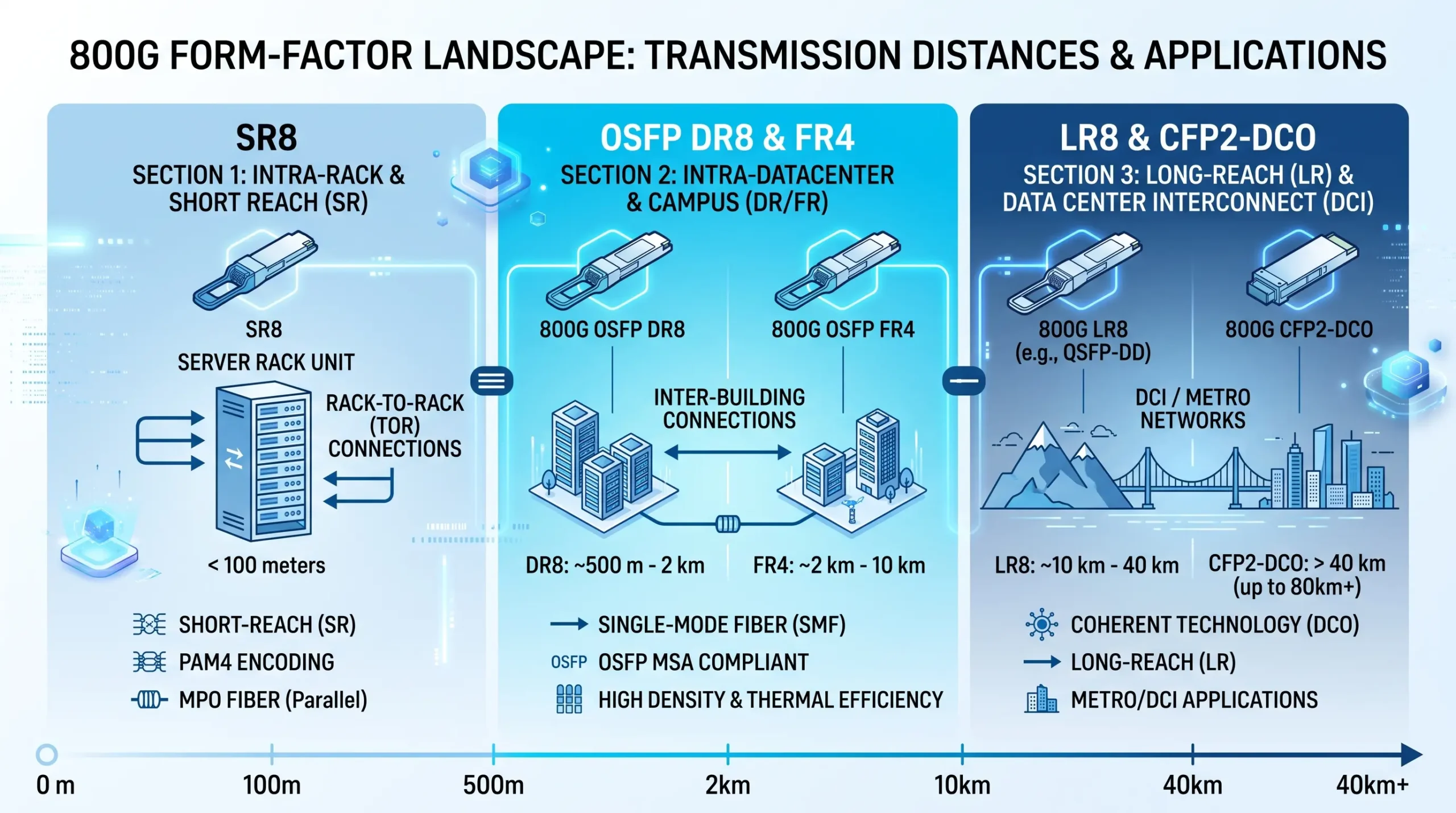
Decoding the 800G Form‑Factor Landscape
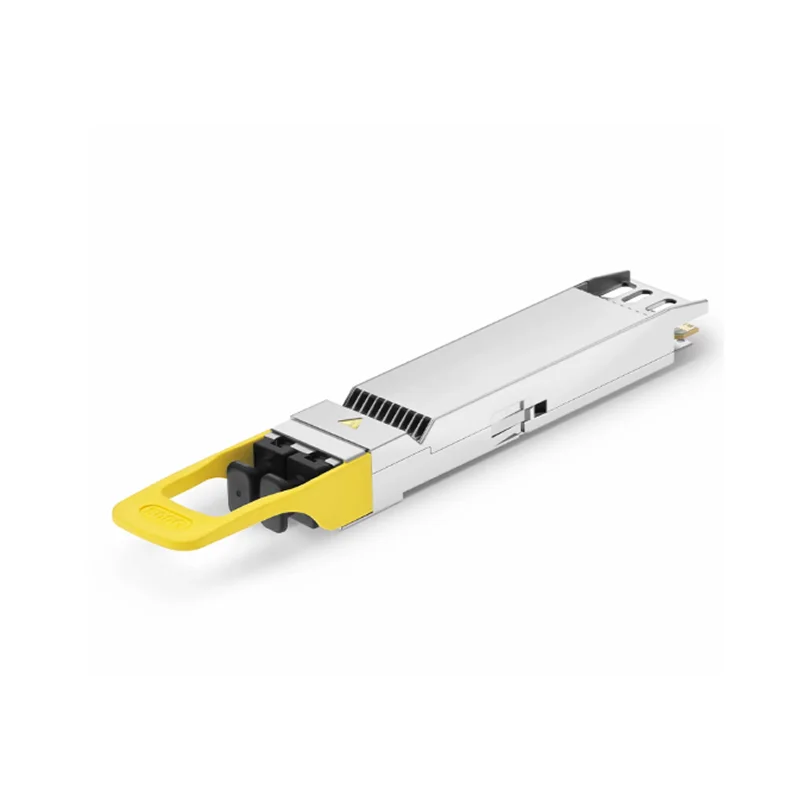
The Short‑Reach Workhorse – 800G OSFP DR8
Inside the data center, the 800G OSFP DR8 transceiver has become the dominant choice for back‑end AI fabrics. It uses eight parallel 100G PAM4 lanes on single‑mode fiber, delivering up to 500 meters of reach and the ability to break out into 2×400G or 8×100G interfaces. Thermal design is mature, and multi‑vendor interoperability has been proven in multiple plugfests, which makes procurement teams comfortable.
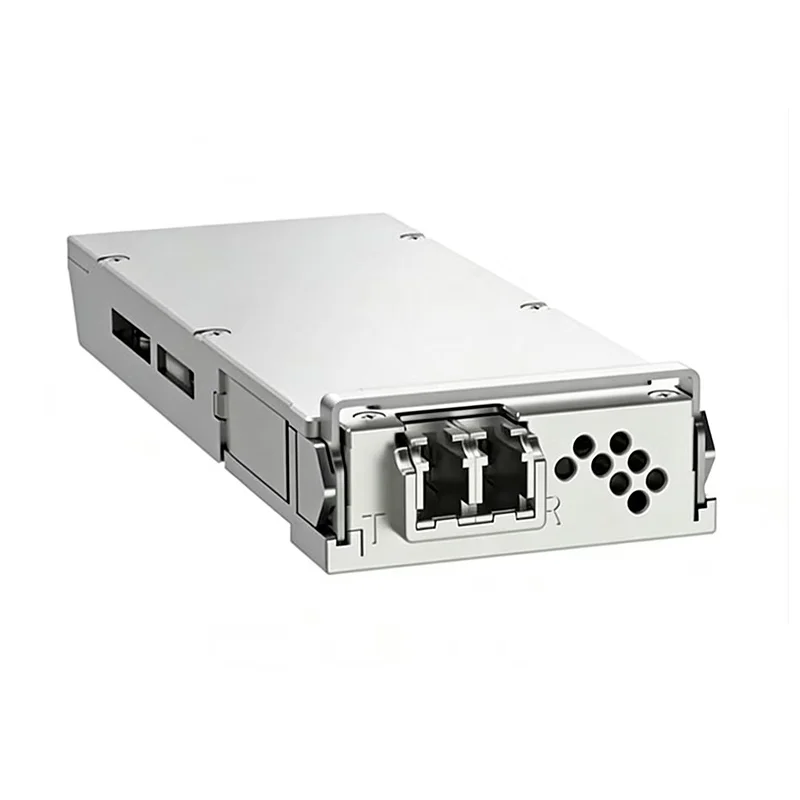
The Long‑Haul Champion – 800G CFP2-DCO Coherent Module
When the distance stretches beyond the data center campus, the 800G CFP2-DCO coherent optical module fills the gap. It packs a digital signal processor and tunable laser into a pluggable that can carry 800G over hundreds of kilometers, turning what used to require a bulky line system into a simple router plug. For data center interconnect (DCI) and metro applications, it is quickly replacing dedicated transport equipment.
Other Contenders
– 800G FR4: 2 km over duplex SMF, cost‑optimized for intra‑campus links
– 800G LR8: 10 km reach using eight wavelengths, good for extended campus
– 800G SR8: 100 meters over multimode fiber, still relevant for in‑row top‑of‑rack
| Form Factor | Typical Reach | Modulation | Typical Application |
|---|---|---|---|
| OSFP DR8 | 500 m – 2 km | 8×100G PAM4 | AI back‑end, breakout to NICs |
| CFP2‑DCO | 80–1000+ km | Coherent QAM | DCI, metro, long‑haul |
| OSFP FR4 | 2 km | 4×200G PAM4 | Hyperscale leaf‑spine |
| OSFP SR8 | 100 m | 8×100G PAM4 | Short intra‑rack |
Coherent vs. Direct Detect: The Philosophical Divide
One might argue the real tension isn’t just speed but how the signal gets from point A to point B. Direct‑detect optics like DR8 and FR4 are cheap, cool, and simple—perfect for the relatively stable, short links inside a data center. Coherent pluggables, on the other hand, handle dispersion and spectral efficiency with a level of finesse that direct‑detect can’t touch. The 800G CFP2‑DCO, for instance, can adjust modulation from QPSK up to 64QAM to trade reach for capacity. The choice often comes down to a practical trade‑off: coherent modules draw more power but eliminate external transponders over long distances.
| Transceiver Type | Typical Power (W) | Max Reach | Key Use Case |
|---|---|---|---|
| 800G DR8 (SiPh) | 14–16 | 2 km | AI back‑end fabric |
| 800G FR4 (EML) | 12–14 | 2 km | Leaf‑spine aggregation |
| 800G CFP2‑DCO | 20–25 | 1000 km | Metro & long‑haul DCI |
Does the Ecosystem Actually Support Ramp‑Up?
Adoption curves don’t bend purely on technical merit—the surrounding ecosystem has to be ready. In 2026, it largely is. Switch chips from vendors like Broadcom and Marvell ship with native 112 Gbps SerDes that map directly to 800G ports without gearboxes. On the standards side, IEEE 802.3df and OIF’s 800‑ZR/800‑LR implementation agreements have locked in interoperability, and the Ethernet Alliance’s 800G overview confirms multi‑vendor plugfests with strong results. Market data paints the same picture: LightCounting’s High‑Speed Optics reports indicate 800G module shipments more than doubled year‑over‑year, with AI‑backed purchases leading the charge. A few enablers stand out:
1. Switch ASICs with native 800G SerDes
2. Mature 112 Gbps lane specifications from standards bodies
3. Multi‑sourced pluggable modules from several optical vendors
4. Volume‑driven cost reductions in silicon photonics
FAQ
Will 800G transceivers work with my existing 400G infrastructure?
Many 800G ports on modern switches support “backward‑friendly” modes through breakout cables. A QSFP‑DD800 port can be split into two 400G QSFP‑DD400 interfaces using a fanout cable, preserving investment in 400G optics while gradually transitioning. Full backward compatibility with older 100G ports isn’t native, but intermediate form‑factor adapters exist for specific migration paths.
Are 800G pluggables really power‑efficient enough for dense AI racks?
Silicon photonics and advanced CMOS DSPs have brought 800G DR8 modules down to about 14–16 W, which equates to under 20 picojoules per bit—far better than running two 400G modules for the same throughput. That said, dense AI racks still demand careful thermal design, and some operators use liquid cooling doors to handle the aggregate heat load.
When will 1.6T optics make 800G obsolete?
The 1.6T generation is already on the roadmap, with standards expected around 2028. However, 800G transceivers will likely coexist for years, much as 400G has coexisted with 100G and 200G in tiered network architectures. The high volume of AI deployments in 2026 suggests a long tail for 800G, especially for cost‑sensitive, mid‑range reaches.