
800G transceivers are becoming a familiar topic across data centers and telecom networks, and for good reason. As traffic grows from AI workloads, cloud services, and high-speed computing, older optics can start to feel a little tight. In practice, 800G transceivers help networks move more data with fewer ports, which is exactly why they are gaining attention so quickly.
What Is an 800G Transceiver?
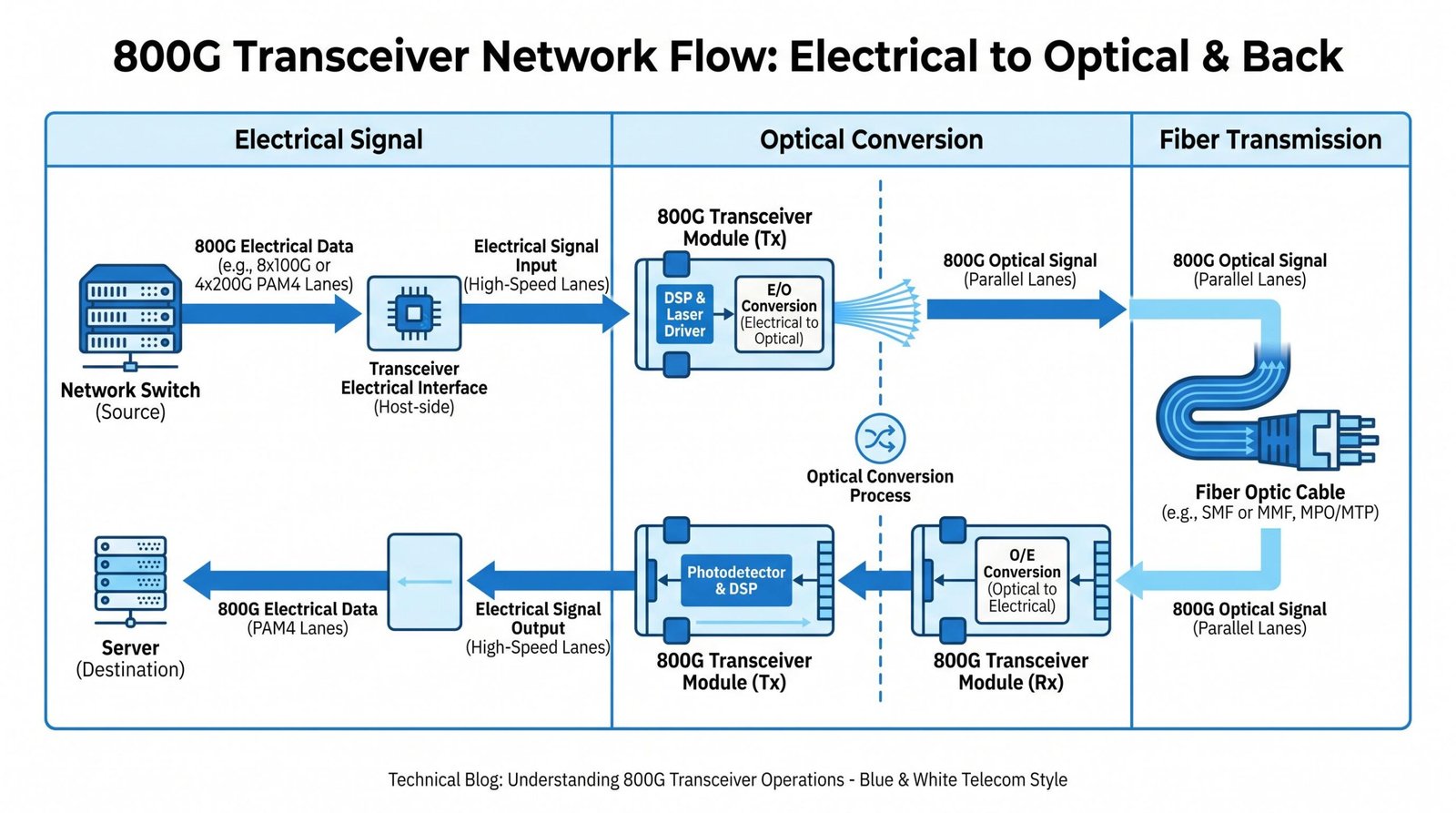
An 800G transceiver is an optical module designed to transmit and receive data at up to 800 gigabits per second. It converts electrical signals into optical signals for transmission over fiber, then converts them back on the other end. That basic function has not changed much, but the scale has.
Industry groups such as the IEEE continue to define Ethernet speed evolution, while the OIF has helped shape coherent optical interoperability for higher-speed transport. Together, these standards support the broader move toward denser, faster networks.
What Do 800G Transceivers Do?
At a practical level, 800G transceivers are built to do three things well:
1. Move more traffic through each port
2. Reduce the number of physical links needed
3. Support high-performance environments with tight space and power limits
Core Functions and Value
| Function | Practical Value |
|---|---|
| Electrical-to-optical conversion | Sends data through fiber |
| High-bandwidth transport | Supports heavy traffic loads |
| Port consolidation | Improves rack efficiency |
| Lower latency | Helps performance-sensitive workloads |
This is why many network teams view 800G as more than a speed upgrade. It often becomes a design upgrade too.
Main Types of 800G Transceivers
Not every 800G module serves the same purpose. Some are optimized for short-reach links inside data centers, while others are built for longer-distance transport.
Short-Reach Direct-Detect Modules
For intra-data-center connectivity, direct-detect options are often the first choice. They are usually simpler and more cost-effective for short links.
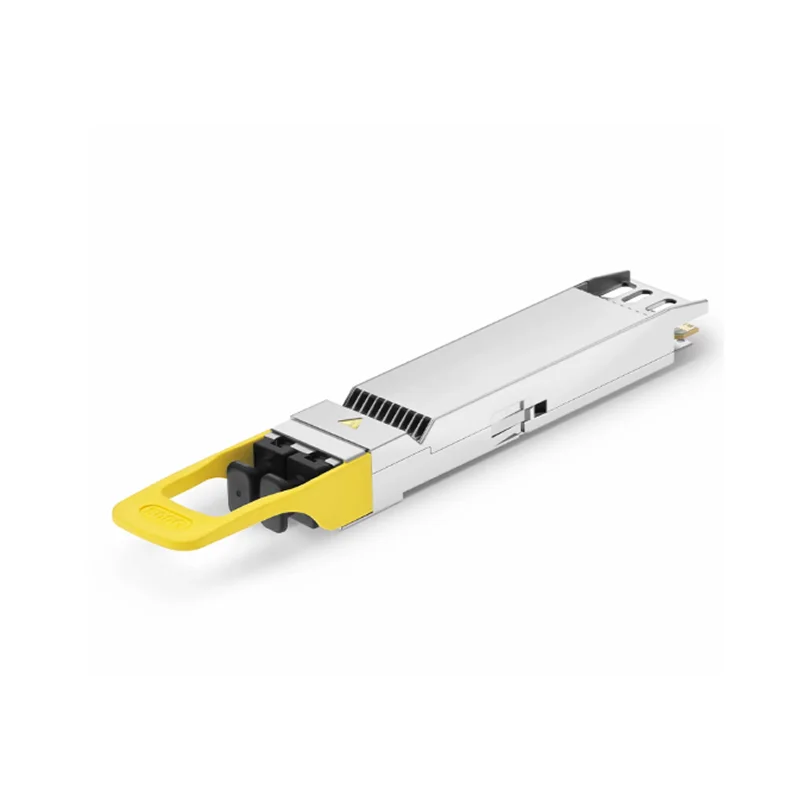
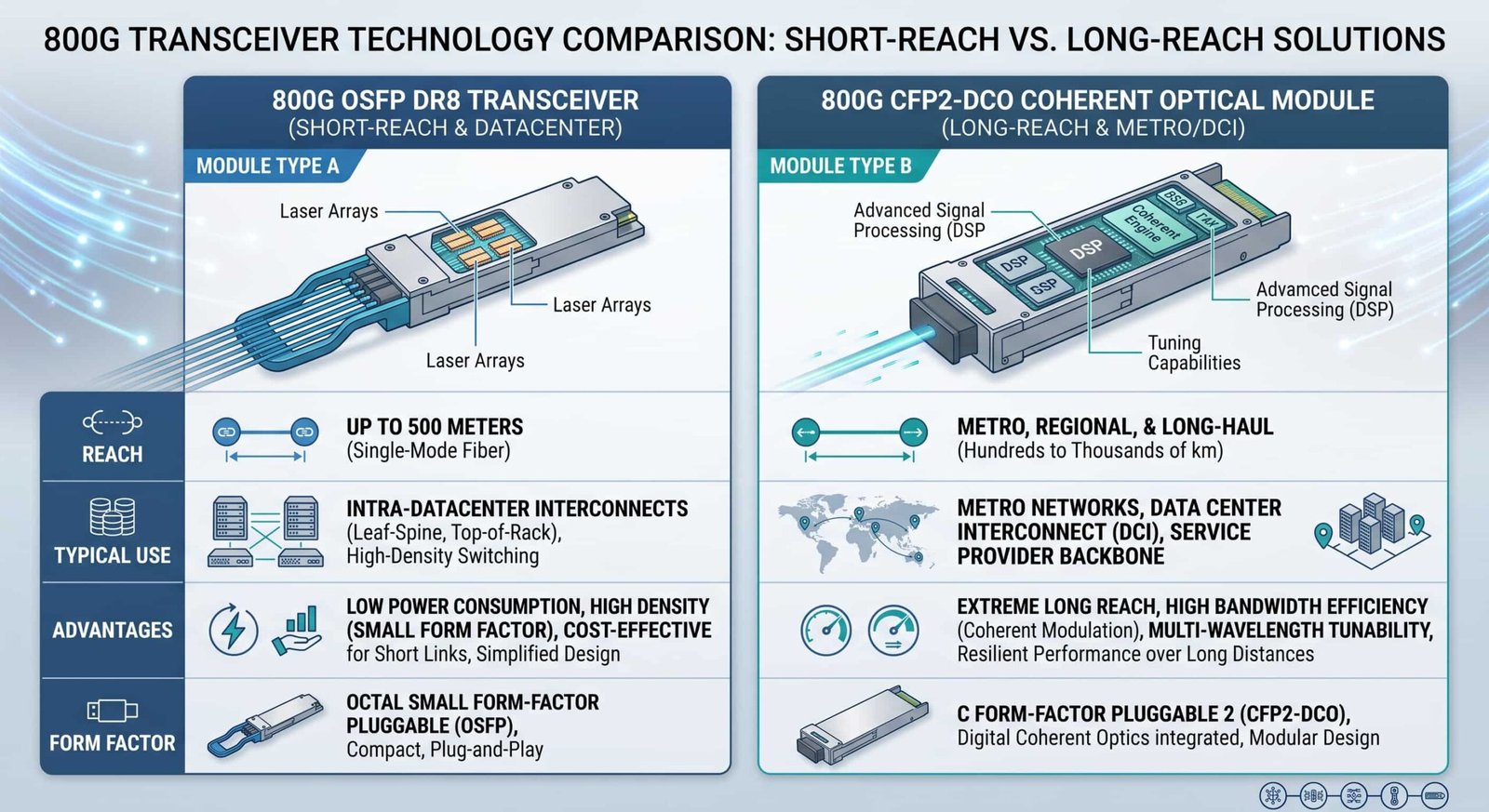
For example, the 800G OSFP DR8 transceiver is commonly used in high-density environments where short-reach bandwidth matters most.
Coherent Optical Modules
Coherent optics are better suited to metro networks, data center interconnects, and other longer-reach deployments. They tend to offer stronger performance over distance, though the design is more complex.
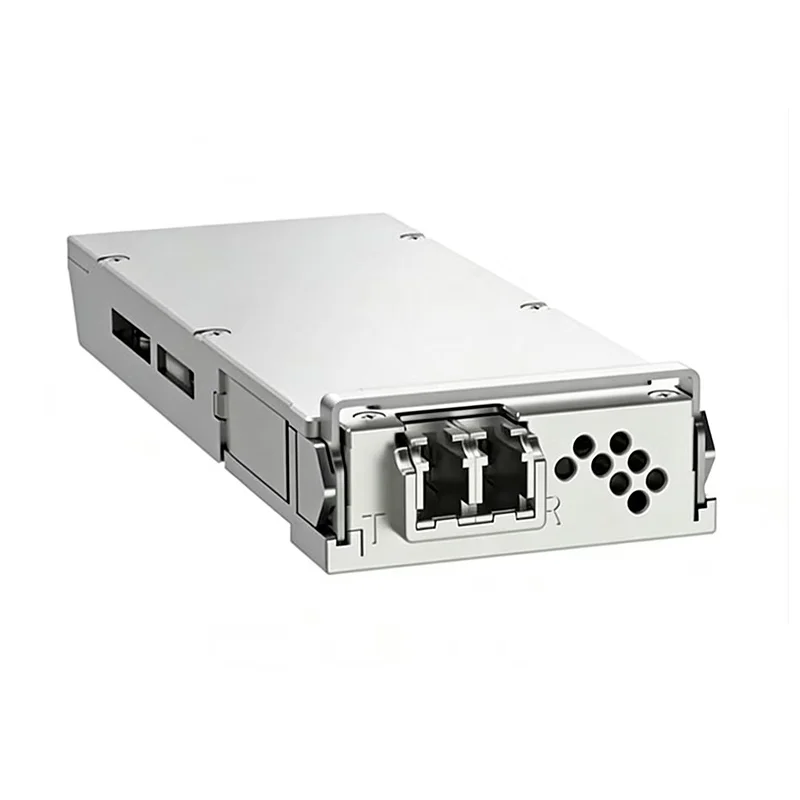
The 800G CFP2-DCO coherent optical module is a typical example for these kinds of applications.
| Type | Reach | Typical Use |
|---|---|---|
| OSFP DR8 | Short reach | Data center links |
| CFP2-DCO | Long reach / coherent | Metro and DCI networks |
Why Form Factor Matters
The form factor is not just packaging. It affects power consumption, port density, airflow, and compatibility. OSFP is widely associated with high-density data center deployments, while CFP2-DCO remains relevant in transport networks where coherent performance is more important than compact size.
Applications of 800G Transceivers
800G transceivers are showing up in a few clear places:
– Hyperscale data centers
– AI and GPU clusters
– Cloud interconnects
– Data center fabrics
– Metro and backbone transport networks
– DCI deployments
In these environments, the goal is usually the same: move more data without making the network footprint explode.
How to Choose the Right 800G Transceiver
A good match depends on the network, not just the speed label.
Key Selection Factors
– Reach requirement: short-reach or long-reach
– Host compatibility: OSFP, CFP2, or platform-specific support
– Power budget: especially important in dense racks
– Deployment cost: optics, cabling, and operational complexity
– Network role: data center switching or transport routing
In simple terms, DR8 fits short-reach data center links well, while DCO is usually the better fit when the network path gets longer or more demanding.
Why 800G Matters Now
The move to 800G reflects where networks are heading, not just where they are today. Higher bandwidth per port, better density, and more scalable infrastructure are hard to ignore. In many cases, the industry momentum around 800G looks less like a trend and more like a practical response to traffic growth.
Conclusion
800G transceivers are a key step in modern network evolution. They deliver much higher bandwidth, improve infrastructure density, and support both short-reach and long-reach use cases. For teams planning the next wave of upgrades, understanding the differences between module types is often where the real value starts.
FAQ
Are 800G transceivers only used in data centers?
No. While data centers are a major use case, 800G modules also support metro, DCI, and telecom transport networks.
What is the main difference between direct-detect and coherent 800G optics?
Direct-detect modules are generally simpler and better for short links, while coherent optics are designed to maintain signal quality over longer and more complex paths.
Is 800G always the best upgrade from 400G?
Not always. The right choice depends on traffic growth, distance, power limits, and existing hardware compatibility.