
In modern fiber optic networks, optical transceivers look like small, inexpensive components, yet they often account for a surprisingly large share of total network cost and risk. A fully populated high-speed switch can carry more value in transceivers than in the switch itself. With hundreds of suppliers competing on price, quality, and service, procurement and network teams frequently struggle to separate reliable manufacturers from intermediaries with inconsistent sourcing and uneven quality control.
The right optical transceiver supplier is the one that proves quality rather than claims it: verify industry certifications and factory test reports, confirm a product portfolio that covers your current and next-generation speeds, demand documented compatibility with your switching platforms, evaluate technical support and warranty terms, and judge quotes against total cost of ownership rather than unit price alone.
The following sections break each of these dimensions into concrete, checkable criteria you can apply during supplier qualification.
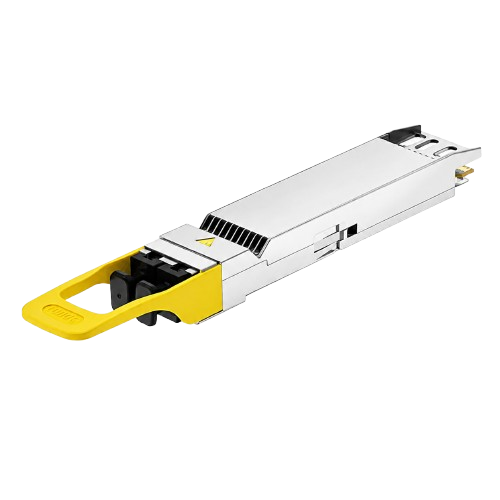
Why Your Supplier Choice Affects Network Reliability
A transceiver is a precision optical and electronic device, and its failure rate, signal integrity, and lifecycle support depend directly on how the supplier designs, assembles, and tests it.
When a supplier cuts corners on laser selection, soldering quality, or ESD control, the symptoms rarely appear on day one. Marginal modules instead show up months later as intermittent links, rising CRC error counters, thermal drift under load, or ports that fail to negotiate after a switch reboot. Because transceivers sit on nearly every link in a network, even a small difference in failure rate multiplies across hundreds or thousands of units.
The hidden costs of a weak supplier are easy to underestimate:
- Troubleshooting hours spent isolating a suspect module from other link problems
- Downtime on production links while replacements ship
- Extra spare inventory required to compensate for unpredictable failure rates
- Repeated return-and-replace cycles that consume engineering attention
These risks grow at higher data rates. At 400G and 800G, optical and electrical tolerances are far tighter than at 10G or 100G, so differences in manufacturing discipline show up faster and cost more to resolve.
Verify Quality Certifications and Factory Testing
A dependable supplier maintains a recognized quality management system and can provide relevant compliance documents and test records.
Testing Evidence to Request
Beyond certificates, ask what the supplier actually measures before shipping. A capable manufacturer should be able to provide:
- Factory test records covering key optical and electrical performance parameters before shipment
- Batch traceability information linking modules to production lots, components, and test results
- Product qualification reports covering reliability tests such as burn-in, aging, and temperature cycling
- Sampling or batch-level test reports when required for larger or mission-critical orders
- Platform-specific compatibility results confirming operation with the intended switches, routers, or transport equipment
- DOM/DDM verification data showing that diagnostic readings remain within the specified accuracy range
Not every reliability test needs to be repeated for every module or shipment. What matters is whether the supplier follows a documented testing process, maintains traceable records, and can provide appropriate evidence for the product and application.
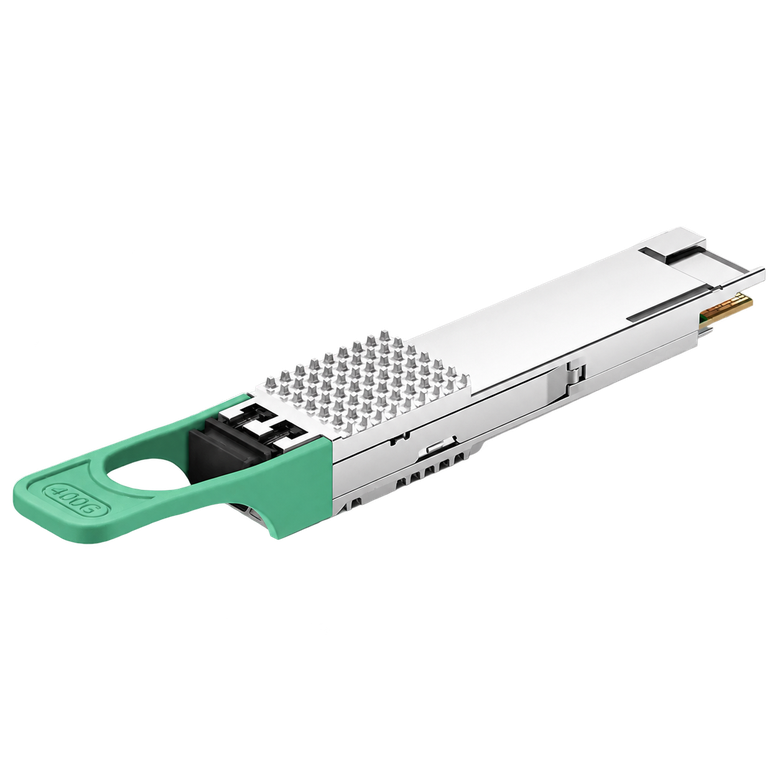
Evaluate Product Portfolio and High-Speed Readiness
A strong supplier covers the full range of form factors and data rates you deploy today, and demonstrates genuine engineering depth at high speeds, where tolerances are tightest.
Portfolio breadth matters for practical reasons. Sourcing every module class from one qualified supplier simplifies quality management, spare stocking, and vendor accountability. A typical coverage map looks like this:
| Data Rate | Common Form Factors | Typical Applications |
| 1G to 10G | SFP, SFP+ | Campus access, enterprise LAN |
| 25G | SFP28 | 5G fronthaul, server access, leaf-spine uplinks |
| 100G | QSFP28 | Data center spine, metro transport |
| 200G to 400G | QSFP56, QSFP-DD | AI clusters, cloud core networks |
| 800G | OSFP, QSFP-DD800 | AI/ML interconnect, hyperscale data centers |
When comparing candidates, browse the supplier’s Optical Transceiver Module catalog and check whether it spans the rates and reaches your network actually uses, including CWDM and DWDM variants for transport links. A catalog that grows with your network means you will not need to requalify a new vendor at every upgrade cycle.
High-speed readiness is the stronger signal of engineering maturity. 400G and 800G modules demand sub-micron optical alignment, sophisticated DSP design, and careful thermal management, so a supplier with validated 400G Optical Transceiver Module products and published test data has already cleared a quality bar that low-speed-only vendors have not. Treat high-speed capability as evidence that the same discipline extends down the product line.
Assess Technical Support and After-Sales Service
Responsive pre-sales and after-sales support is often what separates a long-term partner from a one-time transaction, especially when your own team is small.
Evaluate support along four lines:
- Response time. Send a technical question before purchasing and measure how quickly, and how competently, the supplier answers.
- Warranty and replacement policy. Look for clear warranty terms, an uncomplicated return process, and ideally advance replacement so a failed module does not leave a link dark while paperwork moves.
- Documentation quality. Complete datasheets, installation guides, and compatibility matrices reduce deployment errors and support tickets.
- Engineering assistance. A supplier whose engineers can help review link budgets, reach distances, and platform compatibility adds value that a pure reseller cannot.
Also consider continuity. A single, consistent point of contact who knows your environment shortens every future conversation compared with generic ticket queues.
Compare Pricing Against Total Cost of Ownership
Judge a quote by total cost of ownership, not unit price: a cheap module that fails early or triggers compatibility problems costs far more than a modest premium paid upfront.
Because MSA specifications let multiple manufacturers build interoperable modules, third-party compatible transceivers can often cost substantially less than equipment-vendor-branded optics while meeting the required technical specifications. That price gap is the main reason procurement teams evaluate third-party suppliers at all.
To compare quotes fairly, weigh the unit price against the hidden cost lines:
- Expected failure rate and the downtime each failure causes
- Spare inventory percentage needed to maintain service levels
- Engineering time consumed by compatibility issues and RMA handling
- Shipping distance, customs steps, and replacement turnaround time
- Requalification effort if the supplier changes sources or specifications
A supplier whose pricing sits slightly above the market floor but pairs it with strong testing, fast replacement, and stable sourcing will usually deliver the lower total cost over a three-to-five-year deployment window.
A Practical Supplier Evaluation Checklist
Use the checklist below during supplier qualification; a vendor that cannot answer most items with documented evidence is unlikely to perform under production conditions.
| # | Evaluation Item | What to Look For |
| 1 | Certifications | ISO 9001, CE, FCC, RoHS certificates |
| 2 | Test reports | Eye diagrams, burn-in, temperature cycling data |
| 3 | Compatibility | Platform-specific test evidence and EEPROM coding |
| 4 | Portfolio breadth | Rates, form factors, and reaches matching your roadmap |
| 5 | High-speed capability | Validated 400G and 800G products with published data |
| 6 | DOM/DDM support | Full diagnostics readable per specific SKU |
| 7 | Warranty | Clear terms and advance replacement options |
| 8 | Support quality | Measured response time and documentation depth |
| 9 | Delivery | Inventory depth, lead time, logistics reliability |
| 10 | Total cost | Unit price weighed against failure and support costs |
Run the same checklist against two or three candidates rather than one, and keep the completed evaluations on file so future supplier reviews are consistent. When your network roadmap includes next-generation upgrades, review the supplier’s 800G Optical Transceiver Module category as part of the assessment to confirm that the same quality system extends to your future speed class, not just the products you buy today.
FAQ
Will third-party optical transceivers void my equipment warranty?
In most cases, no. In the United States, the Magnuson-Moss Warranty Act prevents equipment makers from voiding hardware warranty solely because third-party components were used, unless the component itself caused the failure, and several other jurisdictions offer similar protections. Equipment software may flag an unsupported transceiver, but that flag is a compatibility notice, not a warranty void. Always confirm the specific terms of your own support contracts.
Do compatible transceivers support DOM and DDM monitoring?
Quality compatible modules expose the same digital diagnostic registers as branded units, including transmit and receive power, temperature, voltage, and laser bias current, readable through standard switch interfaces. Because DOM implementation can vary by SKU rather than by product family, confirm diagnostic support for the exact part number before placing a volume order.
How long do optical transceivers typically last?
Under normal operating conditions, quality transceivers deliver five to ten years of service. Failures cluster at two points: early-life component defects in the first weeks of operation, and wear-out after years of continuous thermal stress. This failure profile is exactly why factory burn-in testing and a clear warranty and replacement policy should weigh heavily when you compare suppliers.