
Selecting the right Optical Transceiver Speed is one of those decisions that looks simple at first, then turns surprisingly important once network traffic starts growing. A fast module can keep a system smooth and responsive, while the wrong one can create bottlenecks, waste money, or complicate future upgrades. In practice, the best choice is rarely “the fastest one available.” It is usually the one that matches the workload, the port type, the link distance, and the budget.
Why Optical Transceiver Speed Matters
Optical transceivers are not just connectivity accessories. They define how much data can move through a link, how efficiently a switch or server uses its ports, and how much room there is for expansion later. This is why Optical Transceiver Speed should be viewed as a planning factor, not just a specification on a product page.
In Ethernet networks, speed tiers have evolved alongside demand. The IEEE Ethernet standards continue to define how these links operate, and the broader industry has moved from 1G and 10G toward 25G, 100G, and now 400G in high-density environments. The Ethernet Alliance also tracks this progression closely, showing how speed increases are tied to cloud growth, AI traffic, and more demanding east-west data center traffic.
Common Optical Transceiver Speed Options
Different speed classes serve different network layers. That part is straightforward, but the real challenge is choosing the right one for the actual environment.
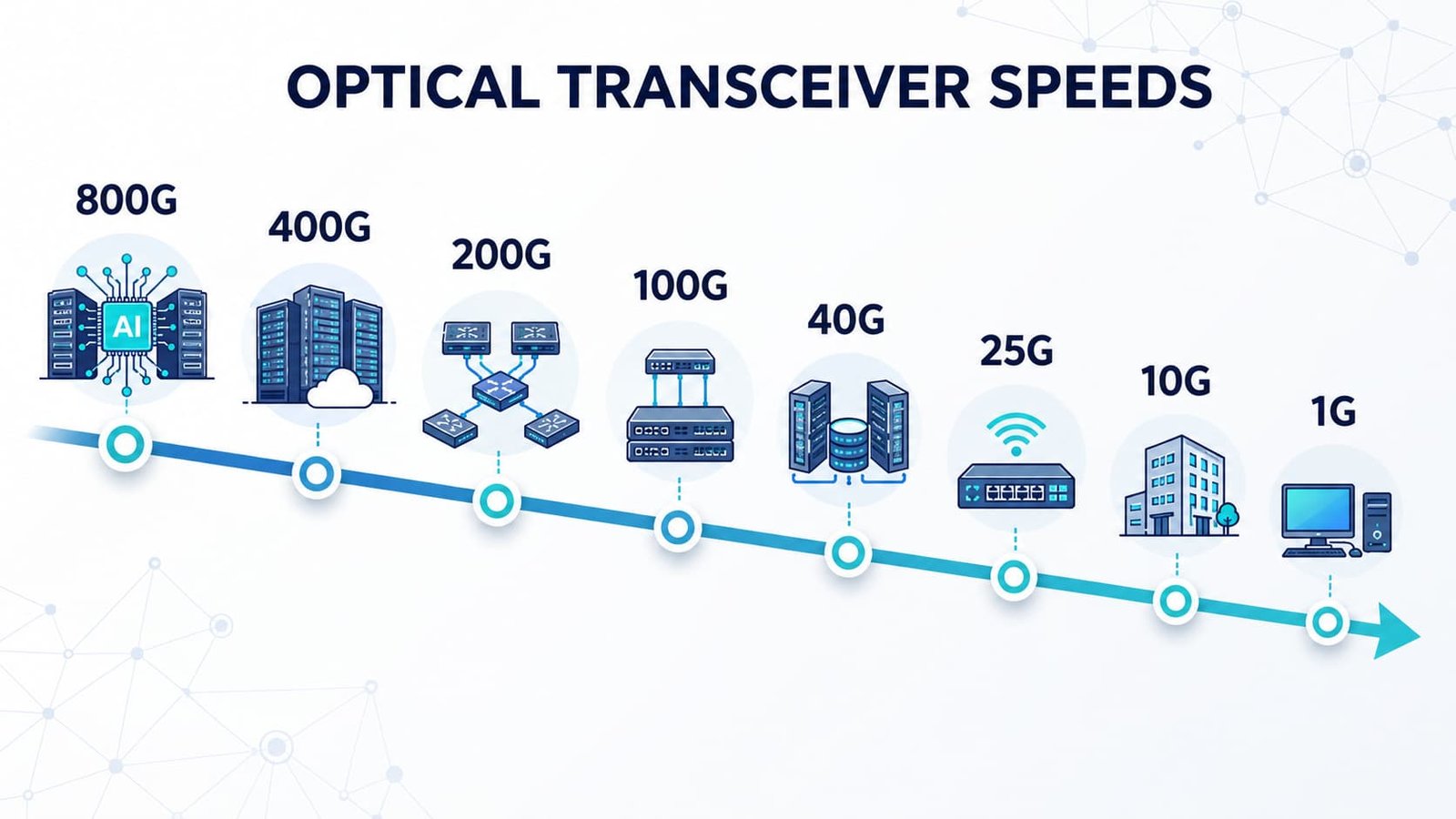
800G:Next-generation Solution
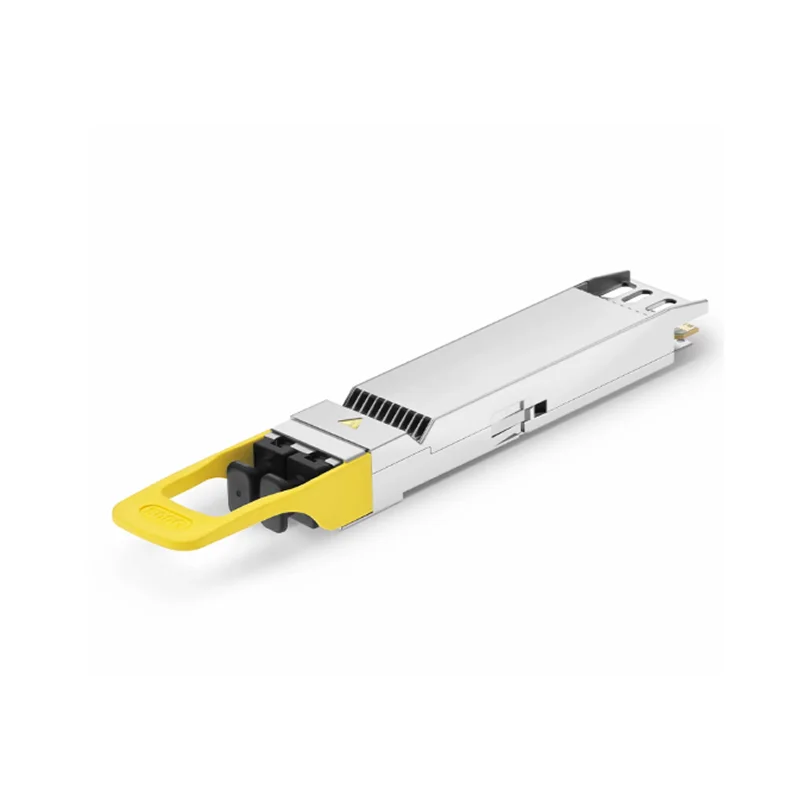
As generative AI and high-performance computing workloads drive unprecedented bandwidth demand, the 800G transceiver has emerged as the core next-generation solution in this high-speed tier. Delivering double the per-port throughput of 400G modules in compact form factors such as QSFP-DD800 and OSFP, 800G optics enable network operators to scale core switching capacity and GPU interconnect bandwidth without expanding rack footprint or cabling volume. For deployments building multi-year roadmaps for dense compute and terabit-level east-west traffic, 800G transceivers offer the most efficient path to future-proofing high-density network fabrics, and have become the baseline standard for large-scale AI training clusters and top-tier cloud backbone networks.
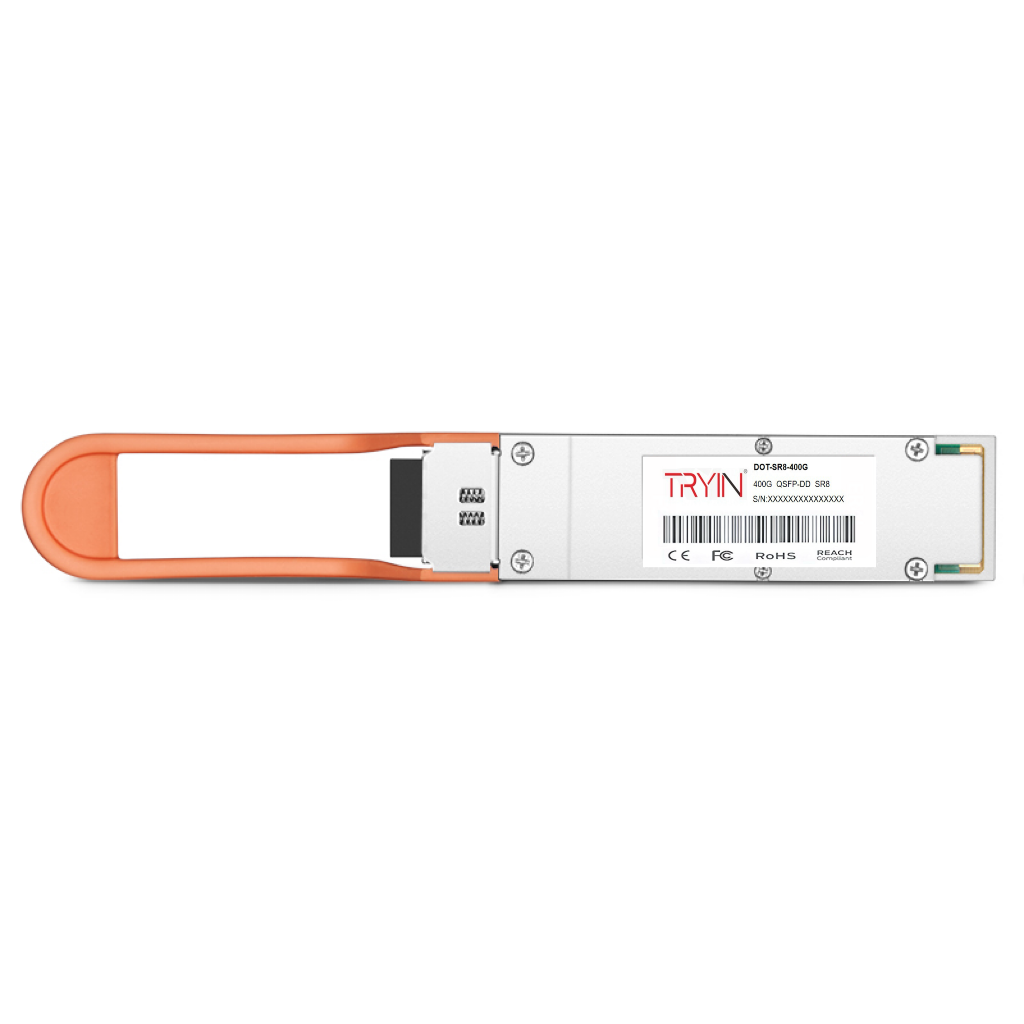
400G and beyond: For dense, traffic-heavy systems
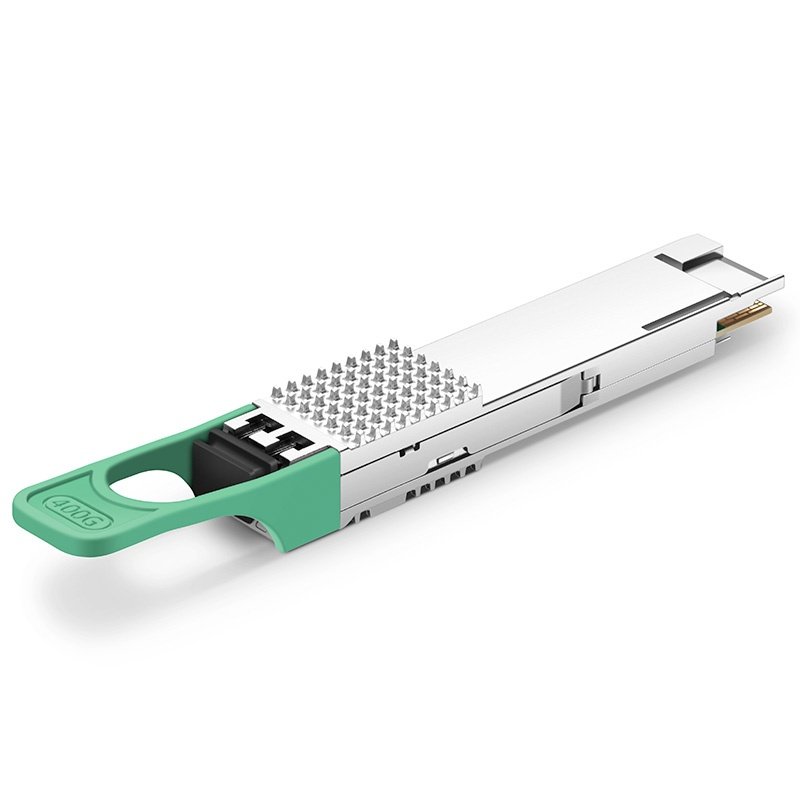
400G is no longer niche, but it is still usually reserved for environments that truly need it. That includes cloud facilities, AI clusters, and large-scale backbone networks. The move toward 400G is one of the clearest signs of where network demand is heading. A useful starting point for browsing these products is the 400G Optical Module.
100G: The mainstream backbone option
For many data centers, 100G is now the default backbone speed. It supports aggregation, core switching, and high-throughput server environments. It is also a practical choice when traffic is growing quickly but 400G would be unnecessary.
25G and 40G: A balanced step up
These speeds are often used in enterprise aggregation and modern server connections. 25G, in particular, has become popular because it offers a good balance between performance and cost. 40G still appears in many existing installations, especially where infrastructure was built around earlier upgrade cycles.
1G and 10G: Reliable for basic and access layers
These remain common in office networks, access switches, and many campus deployments. They are often chosen when stability matters more than raw capacity. For smaller environments, 10G can still be a very practical sweet spot.
Typical uses:
- Office uplinks
- Access switches
- Storage links
- Entry-level server connectivity
Factors That Should Shape the Decision
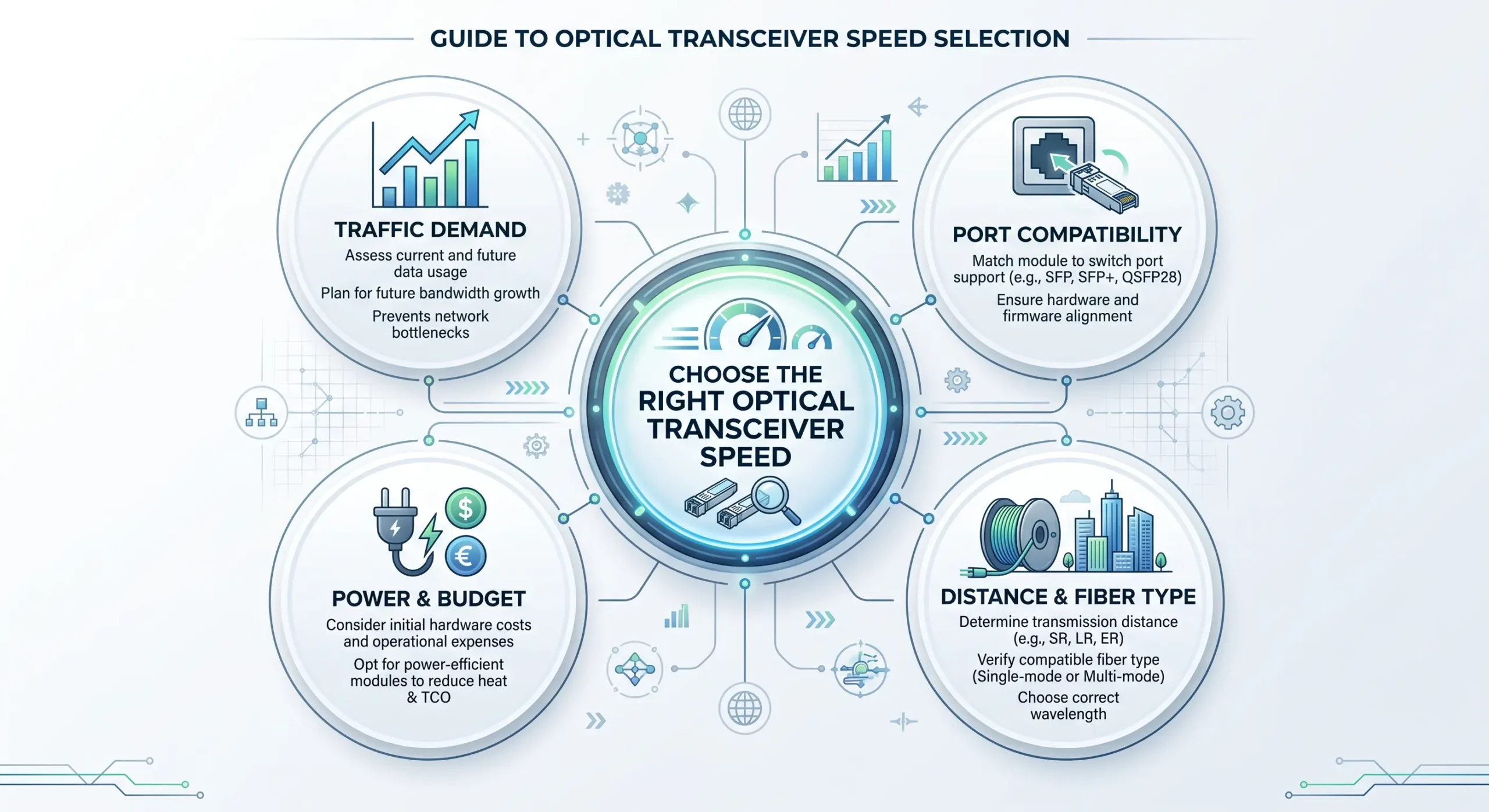
Choosing based only on speed is a common mistake. A network link may support a certain data rate, but that does not mean it is the right fit.
1. Traffic demand and future growth
A simple rule works well here: choose for the traffic expected over the next growth cycle, not only for today’s load. Networks that run close to capacity often experience latency spikes, dropped packets, or constant upgrade pressure.
2. Port and form factor compatibility
An optical module must match the switch cage and supported protocol. SFP, SFP+, QSFP28, and QSFP-DD are not interchangeable in every scenario. This is where many buyers get caught. A module may have the right speed on paper, but the wrong physical format or electrical interface.
For a broader overview of available module types, see Optical Transceiver.
3. Distance and fiber type
Higher speed does not automatically mean longer reach. In many cases, distance depends more on whether the link uses multimode or single-mode fiber, as well as the specific optic standard. Short-reach links may be fine with DAC or AOC, while longer runs usually require single-mode optics.
4. Power and heat
This is often overlooked. Higher-speed modules generally consume more power and generate more heat. In dense racks, that can affect airflow, thermal stability, and even operating cost. A module that performs well electrically may still be a poor fit if the chassis cannot cool it properly.
5. Budget and total cost of ownership
The cheapest module is not always the most economical one. It is better to consider:
- module cost
- switch port utilization
- cabling cost
- power draw
- future upgrade expense
Speed Comparison at a Glance
| Speed Tier | Common Form Factor | Primary Use Cases | Typical Maximum Reach | Network Layer Role |
|---|---|---|---|---|
| 800G | QSFP-DD800 / OSFP | Large-scale AI training fabrics, hyperscale cloud spines, terabit backbones | 40km (SMF) / 100m (MMF) | Core / AI Compute Fabric |
| 400G | QSFP-DD / OSFP | Hyperscale cores, AI cluster interconnects, high-density spines | 80km (SMF) / 100m (MMF) | Core / High-Density Compute |
| 100G | QSFP28 | Data center backbone, high-throughput servers, core switching | 80km (SMF) / 100m (MMF) | Aggregation / Core |
| 40G | QSFP+ | Aggregation switching, legacy data center cores | 40km (SMF) / 150m (MMF) | Aggregation / Core |
| 25G | SFP28 | Modern server access, enterprise top-of-rack switches | 40km (SMF) / 100m (MMF) | Access / Server Edge |
| 10G | SFP+ | Campus uplinks, entry-level servers, storage links | 80km (SMF) / 300m (MMF) | Access / Aggregation |
| 1G | SFP | Office endpoints, access switch uplinks, IoT devices | 10km (SMF) / 550m (MMF) | Access / Edge |
How to Choose the Right Speed for Your Scenario
The best Optical Transceiver Speed depends on where the link sits in the network.
For office and campus networks
In many offices, 1G or 10G is still enough. These environments usually prioritize reliability and predictable cost. Unless video traffic, large file transfers, or virtualization are heavy, jumping too high may not bring real value.
For enterprise data centers
25G and 100G are often the most practical choices. 25G works well for server access, while 100G fits aggregation and core roles. This is usually where careful planning pays off most, because growth tends to happen quickly.
For cloud and AI-heavy environments
400G becomes relevant when link density and traffic volume are both very high. These deployments often need more than just speed; they need better lane efficiency, lower latency, and space-saving architecture.
Common Mistakes to Avoid
A few errors show up again and again in real deployments:
- Buying speed first, compatibility second
- Ignoring fiber reach requirements
- Mixing module types without checking switch support
- Choosing 400G when the actual bottleneck is elsewhere
- Forgetting future growth and rack density
These mistakes are avoidable, but only if the decision starts with the network design instead of the product listing.
Conclusion
Choosing the right Optical Transceiver Speed is less about chasing the highest number and more about matching performance to the real network need. Compatibility, distance, power, and budget all matter, and they matter a lot. In many cases, the smartest choice is the one that fits current traffic while leaving enough room for the next stage of growth.
When the selection is made carefully, the network stays simpler, faster, and easier to scale. And that tends to be the difference between a short-term purchase and a solid long-term infrastructure decision.
FAQ
Is a higher Optical Transceiver Speed always better?
Not always. Higher speed can improve throughput, but it may also increase power use, cost, and compatibility complexity. The best choice is the one that fits the workload and the hardware environment.
Can different transceiver speeds coexist in the same network?
Yes, they often do. Networks commonly mix access, aggregation, and core speeds. What matters is that the design handles conversion and uplink planning cleanly.
How can 400G be justified in a smaller deployment?
It usually is not justified unless the site has unusual traffic growth, dense server east-west traffic, or a clear roadmap toward much higher throughput. In smaller environments, 100G or below is often more practical.