
Bandwidth demand on fiber optic networks keeps climbing as enterprises, data centers, and carriers absorb AI workloads, 5G backhaul, and cloud traffic. Leasing additional fiber strands is expensive and slow, and trenching new cable in metro areas can cost tens of thousands of dollars per kilometer once permits, conduit, and labor are added. Wavelength division multiplexing solves this by turning one existing fiber pair into many independent channels, but procurement teams often struggle with a fragmented supplier landscape, opaque pricing, and wide quality gaps between vendors.
For many buyers, one of the most cost-effective ways to buy a WDM system is directly from an established OEM/ODM manufacturer, especially one based in a major optical component hub. Buying factory-direct can help reduce distributor markups, provide access to customization, and in some cases lower overall system costs compared with carrier-grade platforms sold through tier-one channels. For small, urgent orders, authorized distributors and B2B marketplaces are practical alternatives, while system integrators may be more suitable for buyers who prefer turnkey delivery.
This guide explains how WDM works in brief, compares the four main purchasing channels, breaks down realistic price ranges, and provides a vendor evaluation checklist you can use before signing a purchase order.
What Is a WDM System and Why Does It Matter?
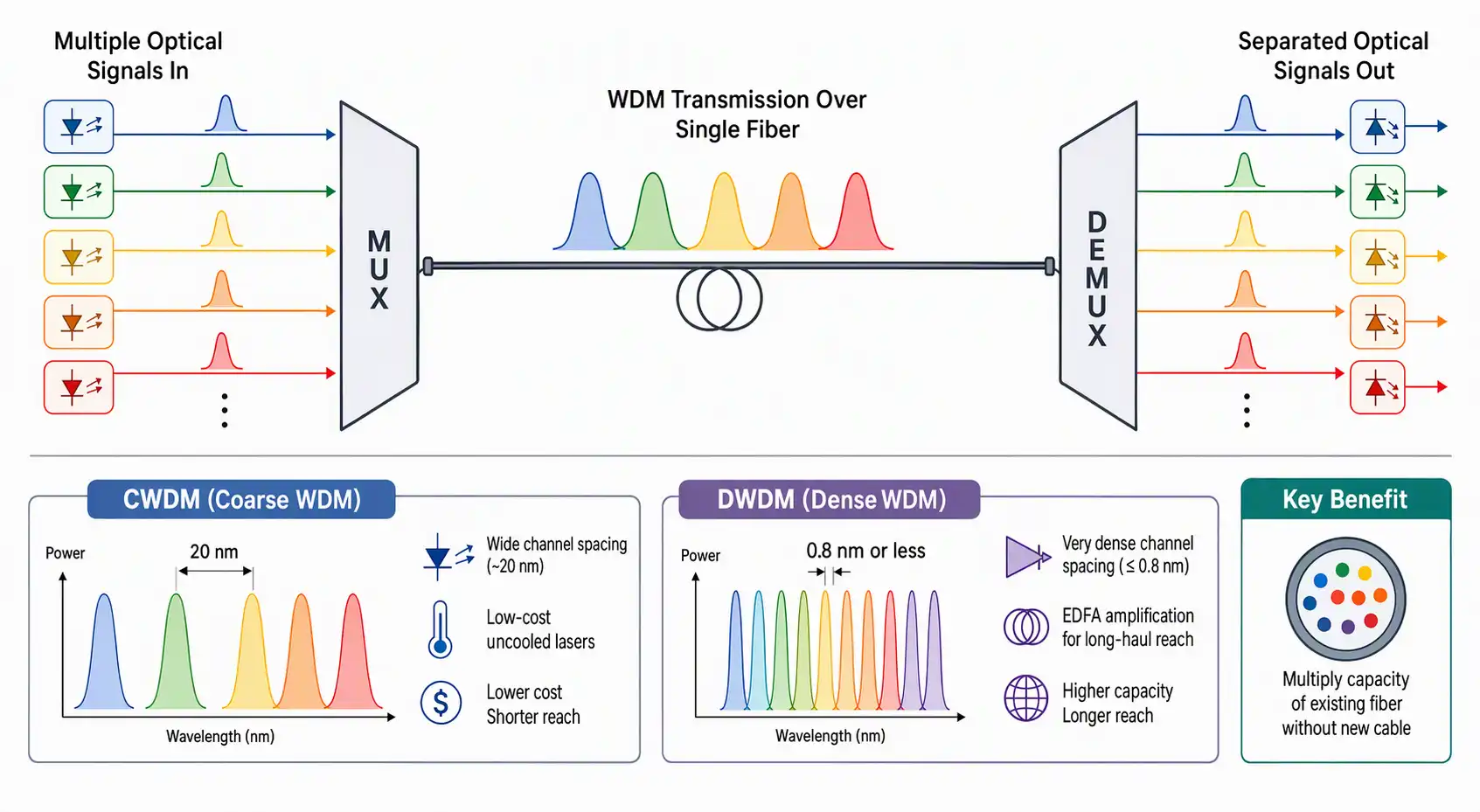
A WDM system combines multiple optical signals, each carried on a different wavelength of light, onto a single fiber, then separates them again at the far end. This multiplies fiber capacity without laying new cable. The technology exists in two main flavors: Coarse Wavelength Division Multiplexing (CWDM), which uses wide 20 nm channel spacing and low-cost uncooled lasers, and Dense Wavelength Division Multiplexing (DWDM), which packs channels 0.8 nm or closer together in the C-band and supports amplification for long-haul reach. For a fuller technical treatment of the underlying principle, see this overview of Wavelength Division Multiplexing from Wikipedia.
CWDM vs DWDM at a Glance
The right technology choice is the first step toward cost-effectiveness, because overbuying DWDM capacity you will never use is the most common source of waste. The two technologies differ most in channel count, reach, and price:
| Attribute | CWDM | DWDM |
| Channel spacing | 20 nm | 0.8 nm / 0.4 nm |
| Typical channels | 8 to 18 | 40 to 96 |
| Reach without amplification | Up to about 80 km | 80 to 120 km |
| With EDFA amplification | Not supported | Hundreds to thousands of km |
| Laser cooling | Uncooled DFB | Thermoelectrically cooled |
| Relative hardware cost | Low | Medium to high |
| Best fit | Metro, enterprise, campus links | Data center interconnect, long-haul, high capacity |
As a rule of thumb, deployments under 16 channels and 80 km favor CWDM, while anything requiring more capacity, longer reach, or future scalability justifies DWDM. The trade-offs between the two are covered in more depth in this comparison of CWDM vs DWDM.
Where Can You Buy a Cost-Effective WDM System and How to Find Them?
There are four realistic purchasing channels for a WDM system: buying direct from manufacturers, going through authorized distributors, ordering from online B2B marketplaces, or contracting system integrators. For most buyers with volume or customization needs, factory-direct purchasing delivers the best price-to-performance ratio, and locating a genuine factory is mostly a matter of knowing which search terms, certification marks, and reference signals to look for. Each channel trades off price, lead time, support, and minimum order quantity differently, and each one needs its own finding strategy, as summarized below.
Direct from Manufacturers
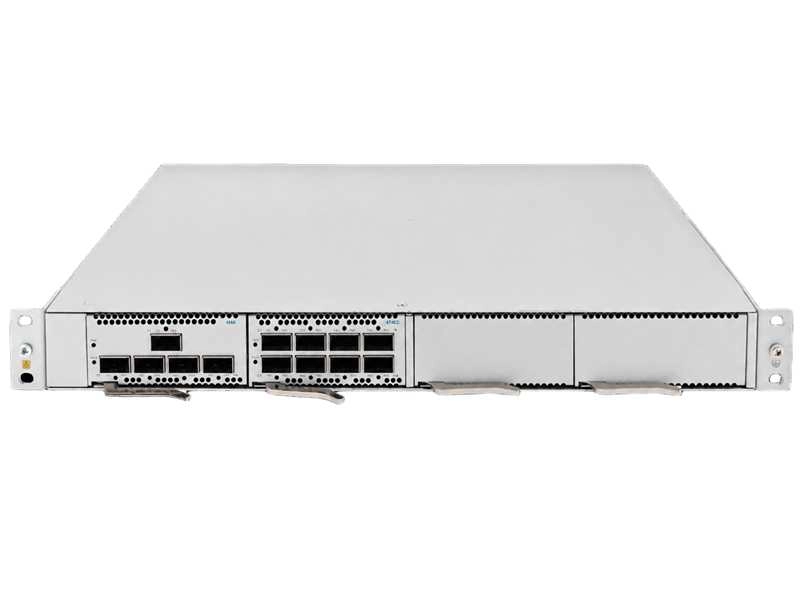
Finding a manufacturer directly becomes straightforward once you know where real factories advertise. Start with industry exhibitions and manufacturer directories, then search with product-level phrases such as CWDM mux manufacturer or DWDM transmission system OEM instead of broad terms like WDM supplier, which mostly return trading companies. A genuine factory typically publishes its own wavelength plans, channel configurations, insertion loss and PDL data, and manufacturing certifications such as ISO 9001 or Telcordia qualification; it answers detailed link-budget questions without forwarding them elsewhere, and it accepts a factory audit or video inspection. Once you have a shortlist, compare complete portfolios rather than single items, because vendors offering full Optical Transport Systems spanning passive mux/demux, amplifiers, and transponders simplify interoperability and after-sales responsibility.
Expect minimum order requirements, longer negotiation cycles, and the work of verifying credibility yourself, but the reward is the lowest unit cost and direct access to the engineers who designed the platform.
Authorized Distributors and Resellers
To find a distributor worth its markup of roughly 20 to 40 percent, work backwards from the manufacturers on your shortlist and ask each one for its authorized partners in your region, then confirm that the partner genuinely appears on the vendor channel list rather than claiming representation informally.
Prefer organizations carrying both passive mux/demux and active equipment such as amplifiers, since a distributor with a narrow catalog will subcontract the rest of your bill of materials. Before committing, settle three points in writing: local stock levels for your exact wavelength plan, in-region warranty and spare-part handling, and whether pre-sales link-budget review is included. Stock depth matters most for DWDM 50 GHz configurations, which are frequently built to order rather than warehoused, so treat instant availability claims for those items with caution and ask for a confirmed delivery date.
Online B2B Marketplaces
Marketplaces are the quickest way to find a supplier, but the search itself needs discipline. Global platforms list thousands of WDM items, from a few dollars for a simple FWDM filter to tens of thousands of dollars for amplifier-equipped systems, so filter aggressively: switch on the verified-supplier and manufacturer-only filters, prioritize companies with several years of trading history, sort by repeat-buyer rate rather than star ratings, and send the same technical questionnaire to at least five vendors to compare how well each one answers.
Treat listed prices as a starting point only, because they frequently exclude connectors, casing, channel configuration, and test reports. Order a single sample unit and verify insertion loss, isolation, and return loss before releasing a volume order. Marketplaces work best for prototyping, spare parts, and standardized passive components such as common CWDM mux pairs, while engineered DWDM links are better sourced through the factory channel.
System Integrators and Local Partners
To find a competent integrator, ask other network operators in your region who commissioned their metro or campus links, and request references for projects of comparable distance and channel count rather than general customer testimonials. During screening, check whether the integrator employs certified optical engineers, whether it performs acceptance testing against a documented standard, and whether it will hand over the measured results of your specific link instead of a generic commissioning report.
Integrators design, supply, install, and commission the entire link, bundling the WDM hardware with transceivers, splicing, and acceptance testing, which suits organizations without in-house optical engineering. To keep this channel cost-effective, insist on itemized quotations so you can compare the hardware portion against factory-direct pricing and negotiate the service component separately.
| Channel | Price level | Typical MOQ | Lead time | Technical support | Customization |
| Manufacturer direct | Lowest | Moderate to high | 1 to 4 weeks | Direct from engineers | Strong (OEM/ODM) |
| Distributor | 20 to 40% higher | Low | Days | Local, limited depth | Limited |
| B2B marketplace | Low to variable | Very low | Days to weeks | Minimal | Rare |
| System integrator | Highest bundled | Project-based | Project timeline | Full turnkey | As specified |
How to Evaluate a WDM Vendor Before You Buy
The lowest quote is rarely the cheapest purchase. Judge vendors on certifications, test documentation, compatibility guarantees, and after-sales response, because a failed DWDM filter or an unsupported transceiver can cost far more in downtime than you saved upfront. Use the following checklist when comparing suppliers:
- Certifications and compliance. Look for ISO 9001 manufacturing, Telcordia (GR-1221/GR-326) qualification for passive components, and RoHS/CE declarations.
- Test reports per unit. Reputable factories ship insertion loss, return loss, PDL, and channel isolation data for every mux, not just datasheet typicals.
- Compatibility commitment. Confirm in writing that the system works with your existing switch and transceiver brands, ideally with a tested interoperability list.
- Customization and channel planning. A capable vendor will design the wavelength plan around your fiber plant, including checking older G.652.A/B fiber for the 1383 nm water peak if CWDM is proposed.
- Warranty and spares policy. Three years is a common baseline for passive components; ask about advance replacement for active line cards.
- Support responsiveness. Test pre-sales response quality first; a vendor that answers link-budget questions in hours will usually handle post-sales issues the same way.
- OEM/ODM capability. If you resell or deploy at scale, verify the factory can handle private labeling and volume scheduling.
- Transparent lead times. Get confirmed delivery dates for your exact configuration, since 40-channel 50 GHz DWDM units are often built to order.
For buyers ready to move from evaluation to quotation, most established vendors provide free link-budget reviews when you share your fiber type, distance, and target rates through their Contact Us page.
FAQ
Q1: Can I use third-party transceivers with a WDM system? Yes, in most cases. Passive mux/demux units are wavelength-specific rather than brand-specific, so any compliant colored transceiver on the correct ITU grid will work. Reputable vendors publish compatibility lists and can run sample testing. Confirm coded-versus-uncoded module requirements and verify DOM (digital diagnostics) visibility on your host equipment before ordering in volume.
Q2: Do passive WDM systems need a power supply? No. Passive CWDM and DWDM mux/demux units are purely optical devices with no electronics, so they draw no power, generate no heat, and need no cooling. Power only becomes a consideration when you add active elements such as EDFAs, transponders, or management modules, which is one reason passive systems have the lowest total cost of ownership for short metro links.
Q3: How many channels should I buy today if I only need a few now? A practical approach is to size the fiber plan, not the equipment, for growth. Buy a mux with spare ports, for example an 8-channel unit when you currently light four wavelengths, because adding channels later only requires plugging in new colored transceivers, not replacing the multiplexer. Skipping this headroom is the most common and most expensive retrofit mistake in WDM procurement.