
What Optical Wavelengths Mean in Real Networks
In practice, optical wavelengths are one of those details that can look minor on a spec sheet but end up shaping the entire link design. A transceiver may fit the port and match the speed, yet still fail the job if the wavelength band is wrong for the fiber plant, the reach target, or the network architecture. That is why wavelength selection tends to matter more than many buyers expect.
At a high level, wavelength is simply the light “color” used to carry data through fiber. Different optical windows behave differently in terms of attenuation, dispersion, and compatibility with multimode or single-mode fiber. In other words, the same physical fiber can support a range of optics, but not every module is designed for the same transmission window.
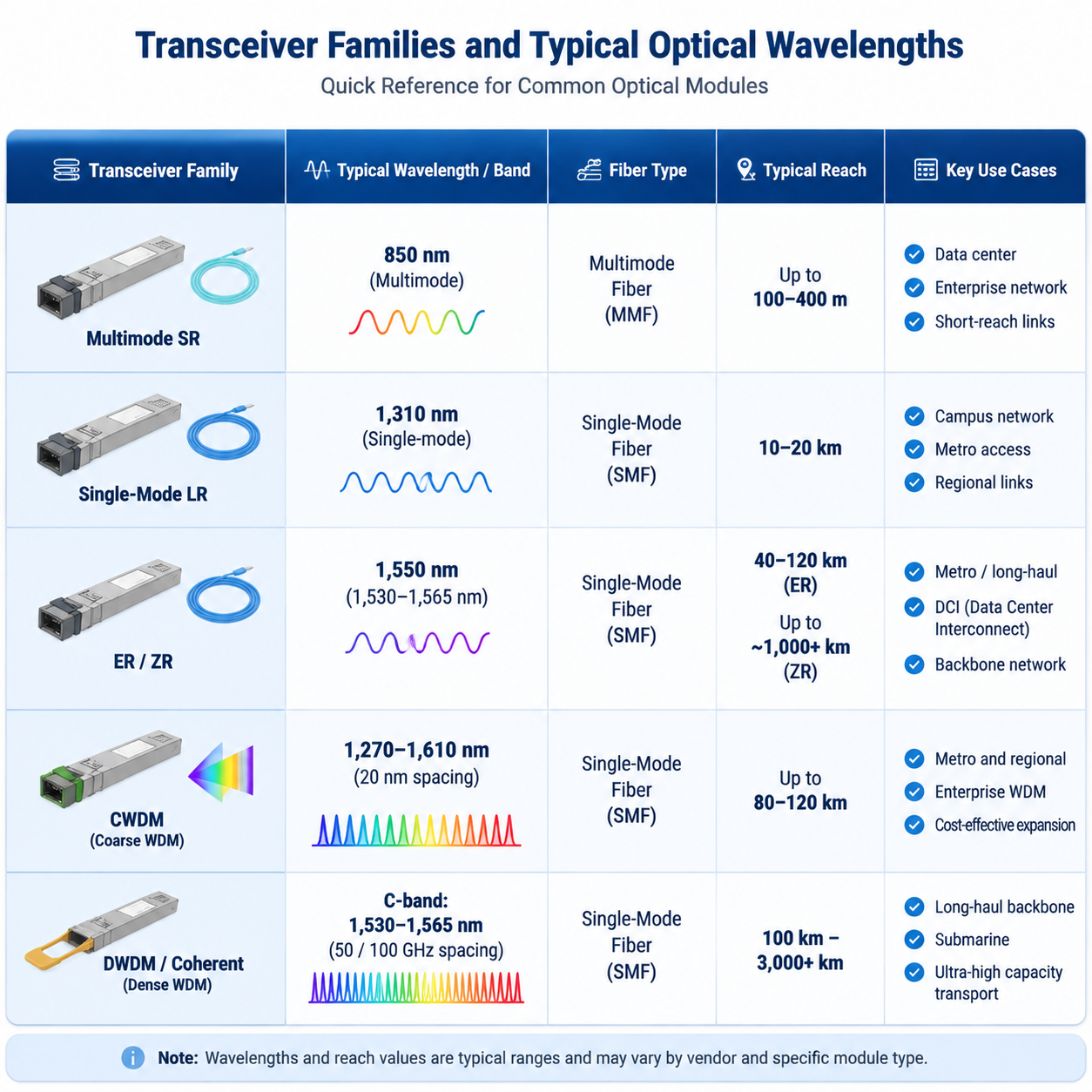
Why wavelength matters more than many buyers expect
A few practical effects usually show up right away:
- Reach changes with wavelength: some bands travel farther with less loss.
- Fiber type matters: multimode and single-mode systems are built around different optical assumptions.
- System design changes: higher channel counts often require tighter wavelength planning.
- Compatibility is not guaranteed: two transceivers may look similar and still use very different optics.
This is why engineers often treat wavelength as a network planning issue, not just a module specification.
The main transmission windows used in fiber optics
Most deployed systems rely on a handful of common wavelength ranges:
- 850 nm for short-reach multimode links
- 1310 nm for standard single-mode links
- 1550 nm for longer-reach single-mode links
- CWDM bands spread across multiple coarse channels
- DWDM channels packed into dense grid spacing, usually in the C-band
Industry references such as the IEEE Ethernet standards and ITU-T optical transport recommendations are useful because they show how these wavelength windows became the practical norm for modern networks. The standards themselves are dense reading, but the basic pattern is consistent across most deployments.
Typical Wavelengths by Transceiver Type
Different transceiver families are built around different optical windows. The relationship is fairly stable, even though vendors sometimes add slight variations for specific products or reach classes.
Short-reach multimode transceivers
Short-reach multimode modules are typically centered at 850 nm. This is the classic choice for short distances inside data centers, campus rooms, or tightly controlled plant layouts. The reason is straightforward: multimode fiber works well for short links and is generally cost-effective for dense, local connectivity.
Common examples include SR-type optics and related variants for Ethernet and storage links. They are usually selected when the goal is to keep costs and power use low while supporting high bandwidth over limited distances.
Standard single-mode transceivers
Most standard single-mode optics are built around 1310 nm. This wavelength is one of the most common in Ethernet transceivers because it offers a strong balance between reach, dispersion behavior, and deployment simplicity. It is often used for general-purpose backbone links, building interconnects, and many data center-to-data center runs.
A typical observation from field deployments is that 1310 nm tends to be the “default safe choice” when the network needs more reach than multimode can provide, but does not yet require long-haul transport behavior.
Long-reach and extended-reach optics
When the distance grows, many transceivers shift toward 1550 nm. This wavelength is strongly associated with longer-reach optics because it performs well in low-loss single-mode fiber and is widely used in metro and transport scenarios.
ER and ZR-type modules often sit in this family, although exact reach depends on power budget, dispersion compensation, and system design. For planners, the main point is that 1550 nm is usually the go-to band when the link is stretching beyond standard 1310 nm assumptions.
CWDM and DWDM transceivers
CWDM and DWDM modules are a different category altogether. Instead of using one “standard” wavelength, they support a set of channelized wavelengths across a broader range. That makes them ideal for networks that need multiple optical channels on the same fiber pair.
Common wavelength patterns
| Transceiver type | Typical wavelength range | Best fit | Practical note |
|---|---|---|---|
| Multimode SR | 850 nm | Short-reach campus/data center | Low cost, short distance |
| Single-mode LR | 1310 nm | General-purpose links | Balanced reach and simplicity |
| Long-reach ER/ZR | 1550 nm | Metro or longer spans | Lower loss at longer distances |
| CWDM | 1270–1610 nm | Multiple coarse channels | Good for simpler multiplexing |
| DWDM | C-band channels | Dense transport systems | High capacity, tighter planning |
For CWDM and DWDM, the key issue is not just the wavelength itself, but the channel plan. In dense systems, small differences in wavelength spacing can determine whether a link is stable, scalable, and operationally manageable.
Passive optical network and access optics
Access networks often use 1310 nm, 1490 nm, and 1550 nm in different upstream and downstream roles. This separation helps the system keep transmission directions distinct while sharing fiber efficiently. PON systems are a good reminder that wavelength selection is often about coexistence, not just reach.
High-speed coherent and transport-oriented modules
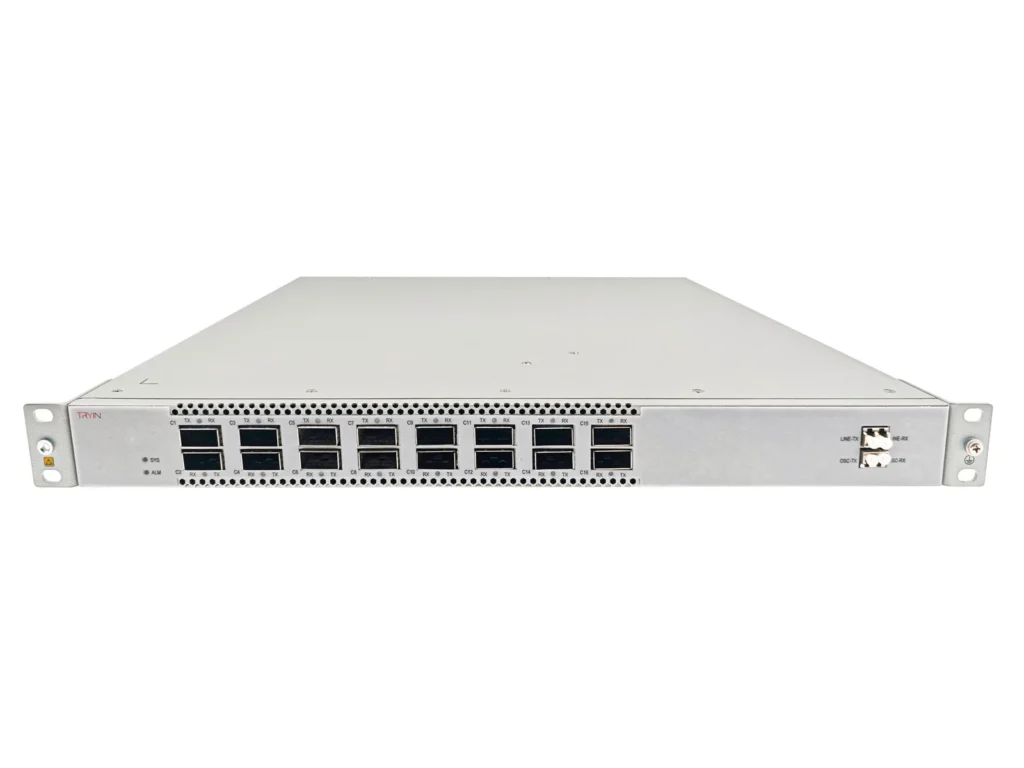
In transport networks, especially those built for high capacity, wavelength planning becomes even more important. Coherent optics typically operate in the C-band, with some systems extending into the L-band for added capacity. This is where the design conversation moves from simple reach questions to full optical layer engineering.
For that reason, modern Optical Transport Systems often depend on careful spectral planning, amplifier design, and channel management rather than a single “best” wavelength.
Comparison Table: Common Optical Wavelengths and Where They Appear
| Optical wavelength | Typical transceiver family | Fiber type | Common use case |
|---|---|---|---|
| 850 nm | SR / short-reach multimode | Multimode fiber | Data center rack-to-rack links |
| 1310 nm | LR / standard single-mode | Single-mode fiber | Enterprise and backbone connectivity |
| 1490 nm | PON downstream / access optics | Single-mode fiber | FTTH and access networks |
| 1550 nm | ER / ZR / long-reach optics | Single-mode fiber | Metro and extended-reach links |
| 1270–1610 nm | CWDM modules | Single-mode fiber | Multiplexed channel systems |
| C-band DWDM | DWDM / coherent optics | Single-mode fiber | Dense transport and long-haul systems |
This table is not exhaustive, but it captures the most common choices seen in day-to-day deployments.
How to Choose the Right Wavelength for Your Network
Choosing the right wavelength is usually less mysterious than it first appears. A practical process tends to work best.
A simple selection sequence
- Confirm the fiber type
- Multimode usually points toward 850 nm.
- Single-mode opens up 1310 nm, 1550 nm, and beyond.
- Define the required distance
- Short links often stay in the 850 nm or 1310 nm range.
- Longer runs generally move toward 1550 nm or DWDM.
- Check channel density
- If only one or two links are needed, standard optics may be enough.
- If many services must share the fiber, CWDM or DWDM becomes more attractive.
- Evaluate power and budget limits
- Higher reach often means more optical budget and sometimes higher complexity.
- Plan for future scaling
- A link that works today may become a bottleneck if the network needs more lanes or more wavelengths later.
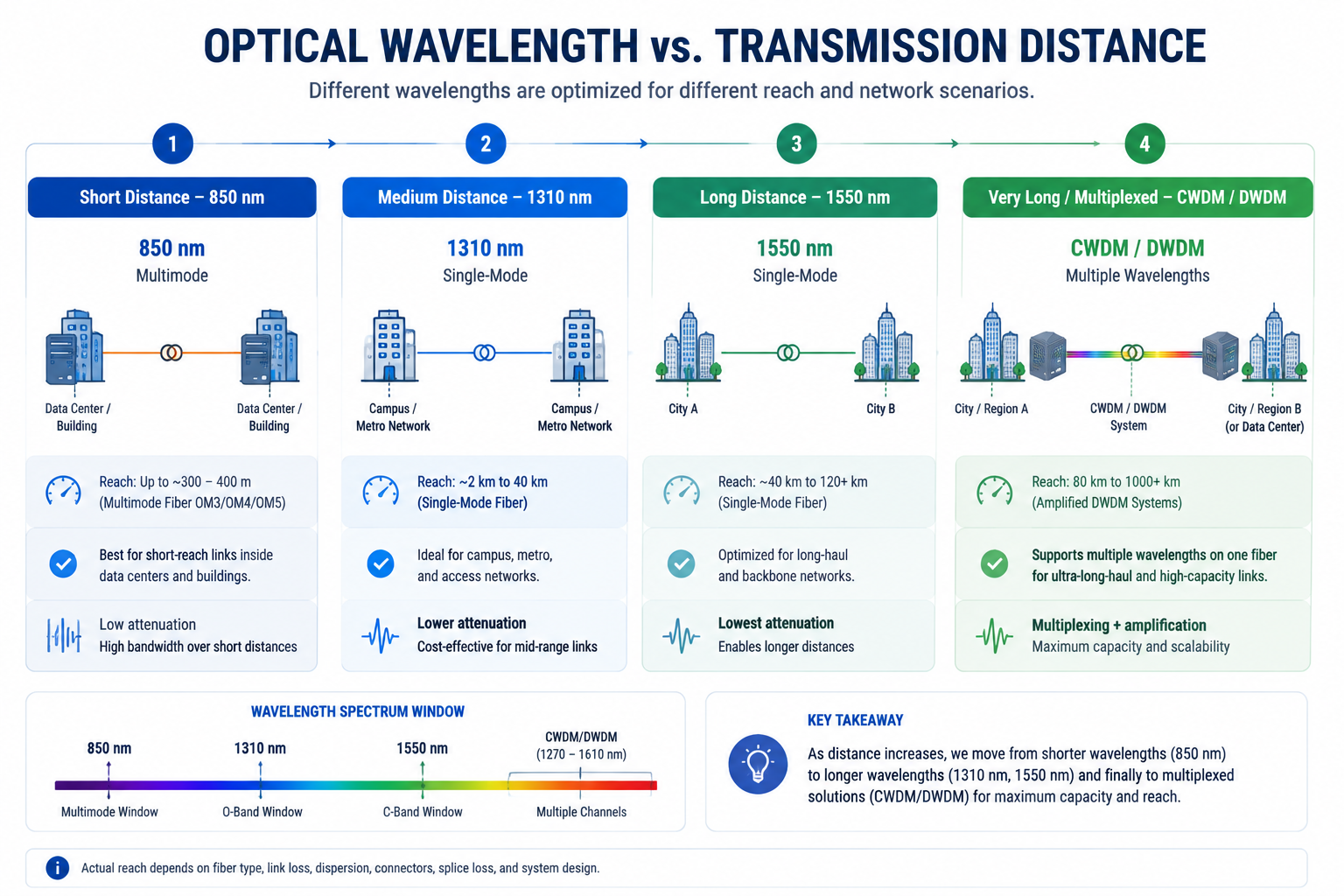
Common selection factors at a glance
- distance
- fiber type
- transceiver power budget
- number of channels
- amplification needs
- upgrade path
That last point is often overlooked. A network that is “just fine” now can become awkward later if the wavelength plan leaves no room for growth.
Common Compatibility Problems and Misconceptions
One of the most frequent mistakes is assuming that identical form factors imply identical optics. They do not.
Same connector does not mean same wavelength
A module can use the same physical cage and connector type but still operate at a completely different optical wavelength. That is why checking the datasheet matters more than checking the front panel.
Wavelength mismatch can fail silently
Sometimes a wavelength mismatch does not produce an obvious error message. Instead, the link simply never comes up, or it behaves unreliably. That kind of failure can waste a lot of troubleshooting time.
Higher speed does not always mean longer reach
A faster module is not automatically a longer-reach module. In fact, many high-speed optics are optimized for short or medium distances first, then extended by using more advanced optical techniques.
For that reason, buyers often compare not just module speed, but the broader family of optical transceiver modules and the wavelength bands they support.
Where High-Speed Optics Are Heading
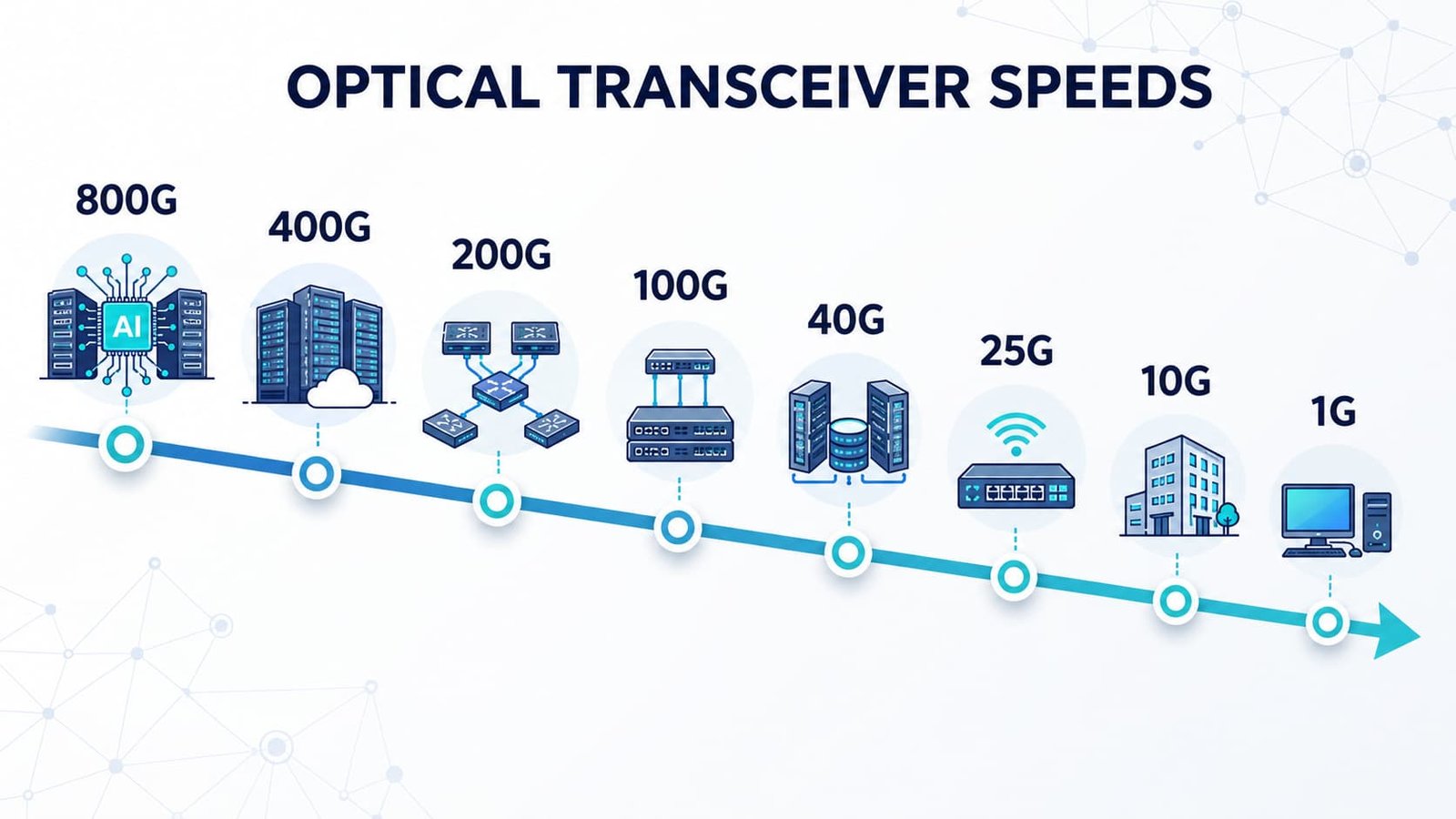
The direction of the market is clear enough: more integration, more bandwidth, and more careful wavelength planning. That trend is especially visible in 400G and 800G systems, where spectral efficiency and reach strategy have become central design topics rather than side notes.
A good example is the rise of the 800G Optical Module family. Even at this speed, wavelength choice still matters. The module may be far more advanced than older generations, but it still has to fit into the right optical ecosystem, whether that is short-reach data center design or transport-grade channel planning.
In other words, faster hardware has not made wavelength irrelevant. If anything, it has made optical planning more important.
Practical Takeaways
The most useful way to think about optical wavelengths is to connect them with the real job the network has to do.
- 850 nm usually means short-reach multimode
- 1310 nm is the everyday workhorse for standard single-mode links
- 1550 nm is favored for longer reaches
- CWDM/DWDM are for networks that need multiple channels and more disciplined planning
- high-speed transport optics often rely on C-band spectral management
That pattern is not absolute, but it is close enough to guide most real-world decisions.
FAQ
Can two transceivers at the same wavelength still be incompatible?
Yes. Wavelength is only one part of compatibility. Protocol support, modulation format, power budget, and vendor-specific implementation can still prevent a clean link.
Why do some networks choose 1550 nm even when 1310 nm seems simpler?
Because 1550 nm often offers better long-distance performance and lower attenuation in single-mode environments, especially where the link budget is tight or the span is longer than average.
Are DWDM and coherent optics always used for long-haul links?
Not always. They are often associated with long-haul and metro transport, but they can also be used in data center interconnects or regional networks when capacity needs justify the complexity.