
What Does It Mean to “Tokenize” an Optical Network?
In the crypto world, a token represents a standardized, divisible, and freely transferable unit of value. In optical communications, the white-box movement is doing something remarkably similar—breaking monolithic, closed systems into standardized, modular, and interchangeable components that can flow across platforms like tokens across blockchains.
For decades, optical transport equipment operated as a “black box”—proprietary hardware tightly bundled with vendor-specific software, locked-in supply chains, and opaque pricing. Operators were stuck with whatever a single vendor offered.
The tokenization of optical networking changes this paradigm through four key mechanisms:
- Standardized interfaces (OpenROADM, OpenConfig) — standardized interfaces enabling interoperability
- Hardware-software disaggregation — separating the “token” from its underlying infrastructure
- Multi-vendor interoperability — enabling cross-platform interoperability, just like tokens trading across exchanges
- SDN-based programmability—enabling automated provisioning, policy-driven control, and network orchestration
Global Trends: Why Optical Networks Are Being Tokenized Now
The year 2026 marks an inflection point. Several converging forces are accelerating this tokenization of optical infrastructure:
Market scale: The global optical communication systems market is projected to reach $38.99 billion in 2026, with Asia-Pacific accounting for over 45% of demand—driven largely by hyperscale data center buildouts and 5G transport network deployments.
AI-driven bandwidth hunger: The explosion of AI training clusters and inference workloads demands massive data center interconnect (DCI) capacity. 800G and 1.6T optical modules have become essential for AI compute fabrics, with optical connectivity hardware expected to grow at 28% CAGR through 2029.
Silicon photonics maturation: Integrated photonics is projected to become a $10 billion market by 2029, dramatically reducing cost-per-bit and making “smaller tokens”—more granular, cost-effective optical building blocks—economically viable.
Open ecosystem momentum: Industry initiatives like ODTN, TIP, and OCP continue to push multi-vendor interoperability testing, building the trust layer that every token ecosystem requires.
The Core Tokens of Open Optical Networks
Infrastructure Tokens: Data Center Interconnect (DCI) Equipment
If open optical networking has foundational tokens, DCI platforms are among them. Modern DCI equipment represent the front line of network tokenization—compact 1U/2U form factors with high transmission capacity, low power consumption, and an open software architecture designed for efficient operation and simplified maintenance.
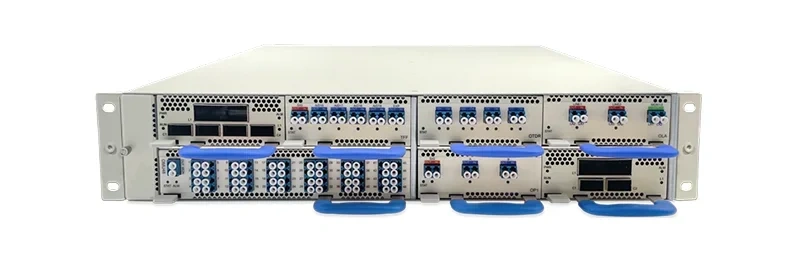
Multi-service interfaces supporting E1/T1, Ethernet, and CPRI—combined with multi-rate adaptive optics spanning 10G to 400G+—allow a single platform to serve diverse connectivity needs. Like a versatile token that works across multiple DeFi protocols, these modular platforms replace the rigid, single-purpose black-box systems of the past.
Hardware Tokens: Pluggable Optical Modules
If DCI equipment represents infrastructure tokens, then pluggable optical modules are the “hard tokens” of the network—physical units that are standardized, portable, and instantly interchangeable.
The MSA (Multi-Source Agreement) ecosystem has enabled interoperability across vendors for these hardware tokens. From QSFP-DD to CFP2-DCO form factors, standardized pluggable transceivers can operate across equipment from different vendors—true cross-platform liquidity.
For high-capacity metro and long-haul links, 800G coherent optical modules leveraging coherent DSP technology deliver the reach and performance that backbone networks demand. For data center fabrics requiring high-density connectivity, 400G QSFP-DD optical transceivers offer the standardized, hot-pluggable solution that makes network tokenization practical at scale.

The full spectrum from 10G to 800G ensures that every layer of the network—access, aggregation, core—can participate in the same open, interchangeable token economy.
Smart Contract Layer: SDN Control and Programmability
Every token ecosystem needs a smart contract layer for automation and governance. In open optical networks, the unified SDN control plane serves this role—providing automated service provisioning, intelligent traffic engineering, and open API ecosystems. This programmability transforms a collection of hardware tokens into a coherent, self-managing network.
Sensing Tokens: Turning Passive Fiber Into Intelligent Assets
The tokenization concept extends beyond transport. Distributed fiber optic temperature sensing systems and related technologies (DVS, DAS) convert ordinary fiber cables into continuous monitoring arrays—effectively minting new “sensing tokens” from previously passive infrastructure.
Applications span pipeline integrity monitoring, perimeter security, structural health assessment, and seismic surveying. This transformation turns “dumb” fiber assets into programmable, data-generating tokens—extending the open network philosophy from transport into the physical sensing domain.
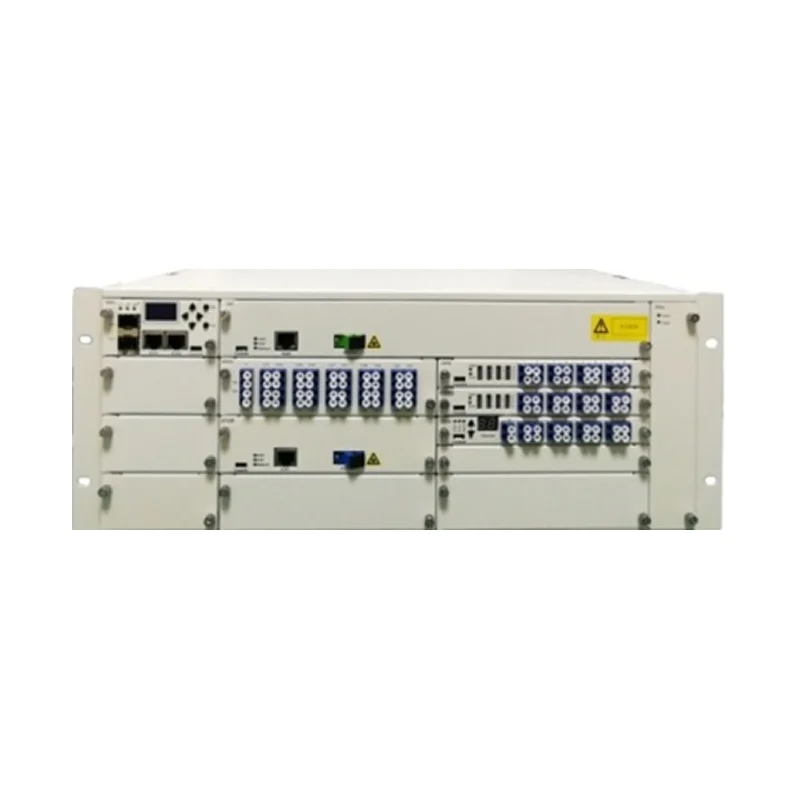
How to Evaluate Your Token Portfolio: Choosing Open Optical Solutions
Building an open optical network is like assembling a token portfolio. Consider these dimensions:
- Standards compliance — Does the equipment support OpenROADM, OpenConfig, or equivalent open protocols?
- Modularity — Can individual tokens (line cards, optics, software) be upgraded independently?
- Management openness — Are northbound APIs available for integration with existing OSS/BSS?
- Supply chain liquidity — Can you source components from multiple vendors without lock-in?
The optimal approach for most operators lies in “gray-box” territory—more open than traditional black-box, yet more turnkey than fully disaggregated white-box—balancing token flexibility with operational simplicity.
The Fully Tokenized Optical Network
As 1.6T optics enter production, AI-driven automation matures, and silicon photonics collapses cost barriers, the tokenization of optical networking will only accelerate. Every pluggable module, every open API, every standardized interface adds another token to the ecosystem.
For operators and enterprises building next-generation infrastructure, the message is clear: the future belongs to networks built from standardized, interchangeable, programmable tokens—not proprietary black boxes. The optical network is going open, modular, and liquid. The tokenization is already underway.