
The core difference is that an SFP optical transceiver uses a single high-speed lane for lower-rate links up to 25 Gbps, while a QSFP optical transceiver aggregates four parallel lanes to reach 40 Gbps, 100 Gbps, and well beyond. SFP is smaller, cheaper, and ideal for access and enterprise connectivity; QSFP is larger, faster, and built for the high-density, high-bandwidth demands of data centers and core networks.
The sections below break down each form factor, compare them side by side, and explain how to match the right module to each layer of your network.
What Is an SFP Optical Transceiver?
An SFP optical transceiver is a compact, hot-swappable module defined by the Small Form-factor Pluggable multi-source agreement, designed for single-channel data transmission at rates from 1 Gbps up to 25 Gbps in its SFP28 generation.
The SFP standard emerged to replace bulkier GBIC modules, packing a transmitter, receiver, and diagnostic electronics into a footprint of roughly 13.4 mm × 8.5 mm × 56.5 mm. Its single-lane architecture keeps power consumption low, typically under 1.5 W, and makes it the default choice where port count matters more than raw bandwidth. Most SFP cages accept duplex LC connectors and expose a digital diagnostic monitoring interface over an I2C bus, letting the host read temperature, transmit optical power, receive optical power, and laser bias current in real time. For teams sourcing Optical Transceiver Module inventory, the SFP family remains the most cost-efficient building block for moderate-rate links, and its mature supply base keeps lead times and unit prices predictable.
-1.webp)
Common SFP Variants and Speeds
| Variant | Lane Count | Max Data Rate | Typical Reach | Common Use Case |
| SFP | 1 | 1 Gbps | up to ~10 km (LR) | Gigabit Ethernet access |
| SFP+ | 1 | 10 Gbps | up to ~40 km (ER) | Enterprise uplinks, server access |
| SFP28 | 1 | 25 Gbps | up to ~10 km (LR) | Server-to-switch, 25G access |
What Is a QSFP Optical Transceiver?
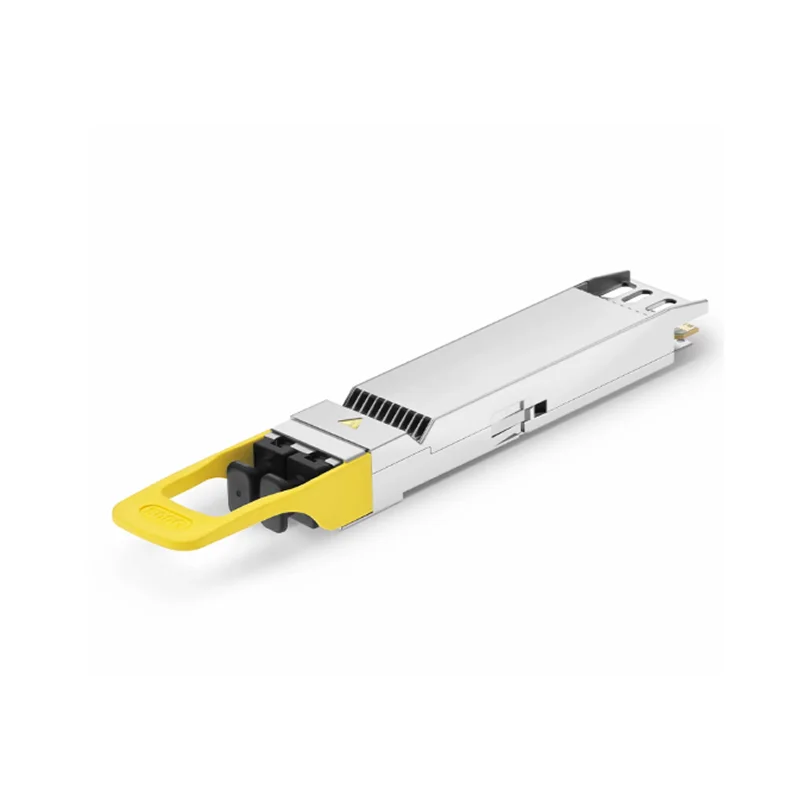
A QSFP-family optical transceiver is a hot-swappable multi-lane module. Traditional QSFP variants use four lanes, while QSFP-DD uses eight electrical lanes to support higher aggregate data rates, including 400G and 800G implementations.
Where SFP uses a single high-speed electrical lane, traditional QSFP modules use four parallel electrical lanes, while QSFP-DD extends the architecture to eight lanes. The family has evolved from 40G QSFP+ through 100G QSFP28 and into QSFP56 and QSFP-DD, with later generations adopting PAM4 modulation to double the bits carried per symbol. Understanding what sets one variant’s throughput apart is largely a question of Optical Transceiver Speed and lane count rather than physical size alone — two QSFP-shaped modules can differ fivefold in bandwidth.
Common QSFP Variants and Speeds
| Variant | Lane Count | Max Data Rate | Modulation | Common Use Case |
| QSFP+ | 4 | 40 Gbps | NRZ | Early data center, aggregation |
| QSFP28 | 4 | 100 Gbps | NRZ | Spine-leaf, 100G core |
| QSFP56 | 4 | 200 Gbps | PAM4 | High-density 200G fabric |
| QSFP-DD | 8 | 400 Gbps | PAM4 | Hyperscale, 400G uplinks |
SFP vs QSFP: Key Differences Explained
SFP and QSFP differ primarily in lane count, data rate, physical size, port density, power draw, and cost: SFP offers a single low-power lane for access-layer speeds, while QSFP combines four or more lanes to serve the high-throughput core.
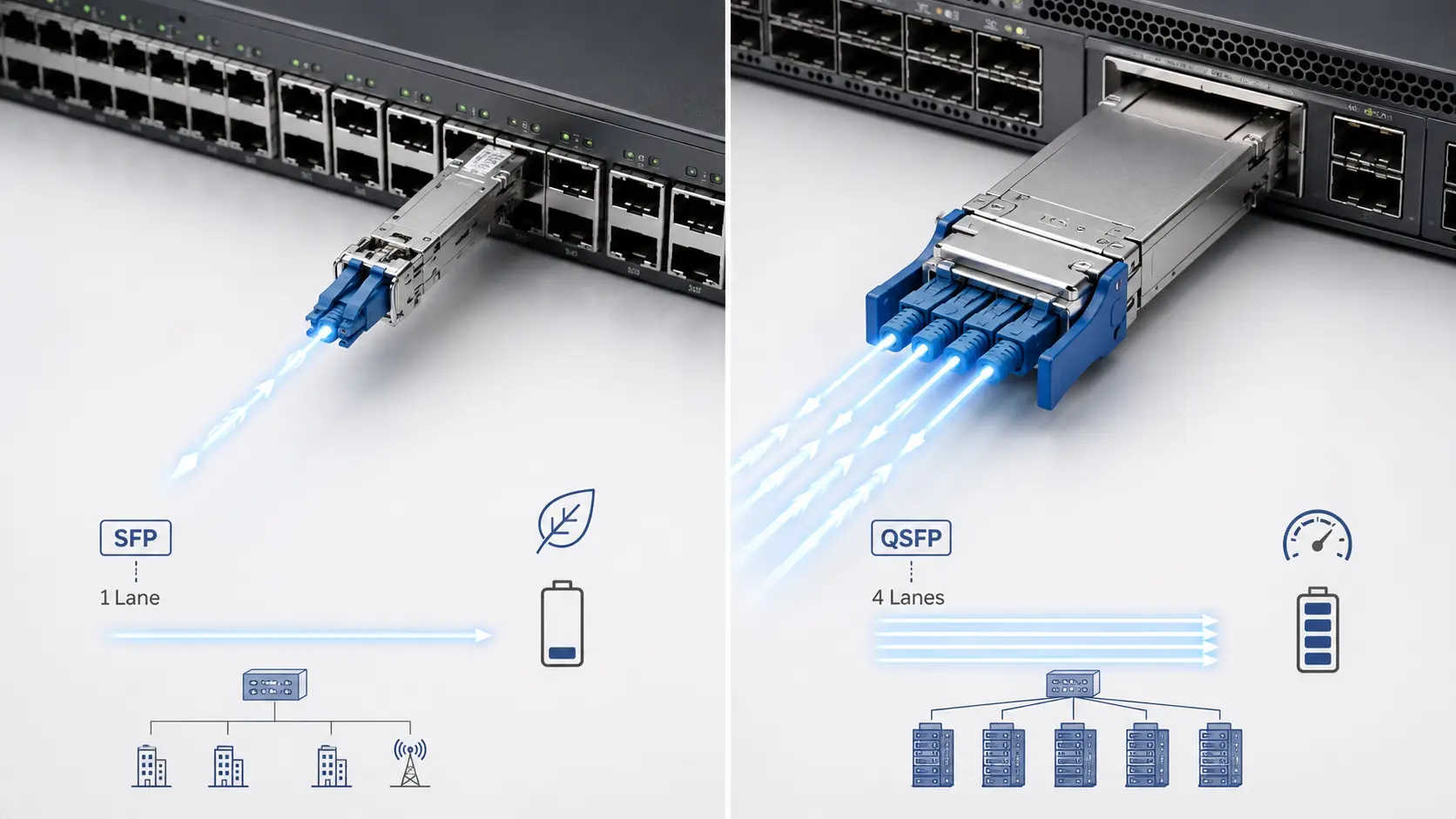
The table below consolidates the parameters that most often drive a purchasing decision. Note that connector types and supported wavelengths also diverge — SFP typically uses duplex LC, while QSFP leans on MPO/MTP multi-fiber connectors for parallel optics, a topic covered in more depth in Common Optical Transceiver Wavelengths Explained.
| Feature | SFP Optical Transceiver | QSFP Optical Transceiver |
|---|---|---|
| Lane architecture | 1 lane | 4 lanes in traditional QSFP variants; 8 lanes in QSFP-DD |
| Max data rate | 1G / 10G / 25G | 40G / 100G / 200G / 400G / 800G, depending on generation |
| Dimensions (approx.) | 13.4 × 8.5 × 56.5 mm | 18.35 × 8.5 × 72.4 mm |
| Typical power | under 1.5 W | 3.5–20+ W depending on rate, reach, and module architecture |
| Connector | Duplex LC | MPO/MTP or LC, depending on optical interface |
| Port density | High (small footprint) | High aggregate bandwidth density |
| Cost per module | Lower | Higher |
| Best fit | Access, enterprise, campus | Data center, core, aggregation, and high-bandwidth interconnects |
Form Factor and Channel Architecture
The single most fundamental distinction is lane count. An SFP module carries one transmit and one receive channel, so its headline speed equals what one lane can sustain. A traditional QSFP module carries four high-speed lanes in parallel, while QSFP-DD carries eight; aggregate throughput therefore depends on both the lane count and the signaling rate per lane. This is why a QSFP28 delivering 100 Gbps is built from four 25 Gbps lanes rather than a single 100 Gbps stream — the parallel design keeps per-lane signaling within proven, interoperable limits while still scaling total bandwidth. The trade-off is footprint and power: four lanes need more lasers, more driver circuitry, and a larger thermal envelope, which is why QSFP cages are engineered for higher airflow than SFP bays.
Speed, Power Consumption, and Cost
Speed scales with both lane count and modulation. Early SFP and QSFP+ use NRZ modulation, encoding one bit per symbol; newer QSFP56 and QSFP-DD adopt PAM4 to pack two bits per symbol, doubling throughput without enlarging the module. These electrical and optical behaviors are standardized under IEEE 802.3 Ethernet specifications, which define the physical layer parameters each variant must meet for multivendor interoperability. Power and cost follow the same curve: a 1G SFP may draw under 1 W, while a 400G QSFP-DD can require up to 12 W, and its unit price runs several times higher. Per gigabit, however, higher-rate modules are often more efficient — a QSFP+ at roughly 3.5 W for 40 Gbps beats four 10G SFP+ ports in aggregate power and cabling, which is why density-driven designs favor QSFP even when the upfront price is steeper.
Are SFP and QSFP Compatible?
SFP and QSFP are not directly compatible: they use different physical dimensions and electrical interfaces, so you cannot plug an SFP module into a QSFP port or vice versa.
That does not mean the two worlds cannot connect. The most common bridge is a QSFP-to-SFP breakout cable, which splits one 40G QSFP+ port into four 10G SFP+ links, useful when a high-rate spine port must fan out to slower access devices. A QSFP-to-SFP adapter (often called a QSA) offers another path, housing an SFP+ module inside a QSFP-shaped carrier so a QSFP+ cage can serve a single 10G connection. Both approaches trade some convenience for flexibility, and both introduce points where misconfiguration or dirty connectors can cause link flapping and elevated bit error rates — problems detailed in any practical Optical Transceiver Troubleshooting Guide. Before deploying adapters, always confirm that the switch firmware supports breakout mode, that the cable’s lane mapping matches both ends, and that any MPO connectors are inspected and cleaned before insertion.
When to Use SFP vs QSFP: Application Scenarios
Use SFP for lower-rate, high-port-count access and enterprise links where cost and density matter; use QSFP wherever aggregate bandwidth, spine-leaf scaling, or core uplinks demand 40 Gbps and above.
SFP modules dominate the access layer — desktop uplinks, building-to-building fiber, and 10G server connections — because their small size keeps switch faceplates dense and their low power eases cooling. QSFP modules take over at the aggregation and core layers, where consolidating four lanes into one port reduces cabling complexity and frees chassis slots for growth. A 100G spine, for instance, is commonly built from 100G Optical Module QSFP28 links, while hyperscale operators pushing toward 400G and beyond rely on 800G transceivers built on QSFP-DD and OSFP form factors.
Matching the Module to Your Network Layer
- Access layer: deploy SFP or SFP+ for 1G–10G server and user links, where port count and cost per port are the priority.
- Aggregation layer: use SFP28 (25G) or QSFP+ (40G) to collect access traffic, balancing speed and density.
- Core or spine layer: adopt QSFP28 (100G) or QSFP-DD (400G) to handle east-west traffic between switches with minimal cabling.
- Inter-data-center links: select higher-reach QSFP variants (LR4, ER4, ZR4) or coherent modules for distances from 10 km to 80 km and beyond.
How to Choose Between SFP and QSFP
Base the choice on required bandwidth, available port density, budget, and future scalability: pick SFP when 25 Gbps or less per link is enough, and pick QSFP when you need 40 Gbps and higher with room to grow.
Start by mapping the traffic profile of each link — storage, virtualization, user access, or inter-switch fabric — and project where demand will sit in two to three years. If a link is unlikely to exceed 10 Gbps, SFP+ keeps total cost of ownership low through cheaper modules, simpler cabling, and lower cooling load. If the workload is expected to push past 25 Gbps, investing in QSFP infrastructure early avoids costly retrofits and port saturation later. Pairing this bandwidth forecast with guidance on Optical Transceiver Speeds helps align the form factor with both current load and the next upgrade cycle. Also confirm switch compatibility, fiber type (single-mode versus multimode), and thermal headroom before finalizing any Optical Transceivers order, since a module that fits the cage on paper can still fail to negotiate a link if its EEPROM coding is not recognized by the host.
FAQ
Can a QSFP port be broken out into SFP connections?
Yes. A QSFP+ port can be split into four SFP+ links using a breakout cable, which carries one 40G connection as four 10G channels. The switch must support breakout mode, and the cable type — direct-attach copper, active optical, or fiber with an MPO-to-LC fanout — determines the usable distance and whether separate transceivers are needed at the SFP end.
Does the SFP family support distances beyond 10 km?
Yes. SFP+ and SFP28 modules in LR, ER, and ZR variants reach 10 km, 40 km, and 80 km respectively over single-mode fiber. DWDM SFP+ modules extend even farther by multiplexing multiple wavelengths onto one fiber pair, making the small form factor viable for metro and long-haul links, not just short access runs.
Is QSFP-DD backward compatible with QSFP28?
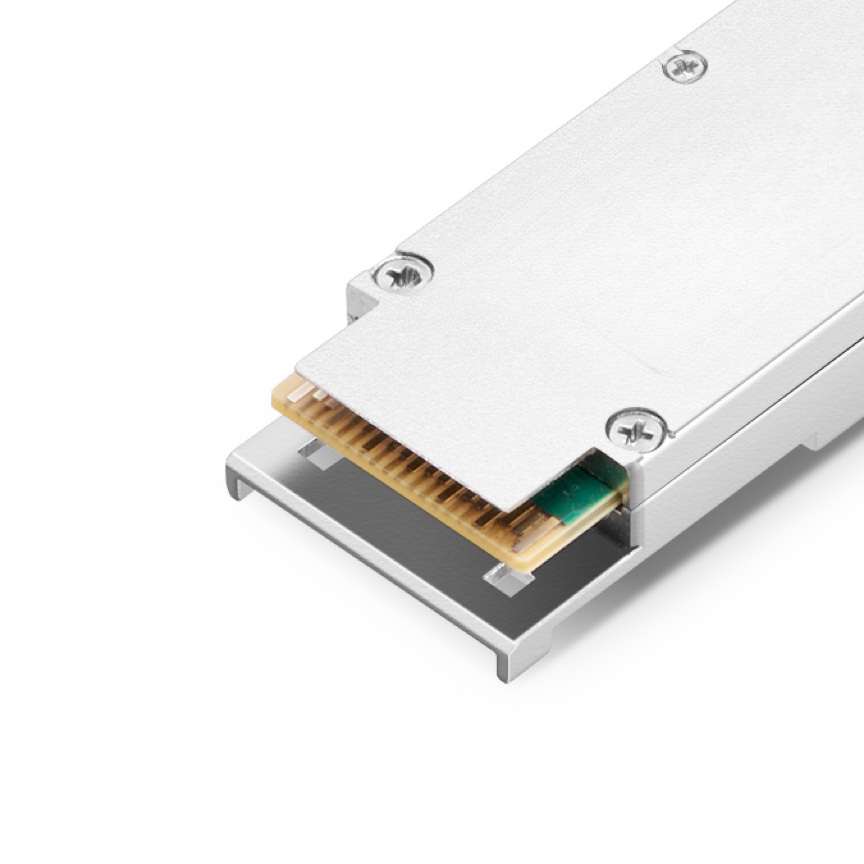
Yes. QSFP-DD preserves backward mechanical compatibility with earlier QSFP-family modules while extending the host electrical interface from four lanes to eight lanes. so a QSFP-DD cage can accept a QSFP28 or QSFP+ module at its native lower speed. The additional row of contacts in QSFP-DD is what enables the eight-lane, 400 Gbps and higher rates, but it does not prevent use of legacy four-lane modules.